

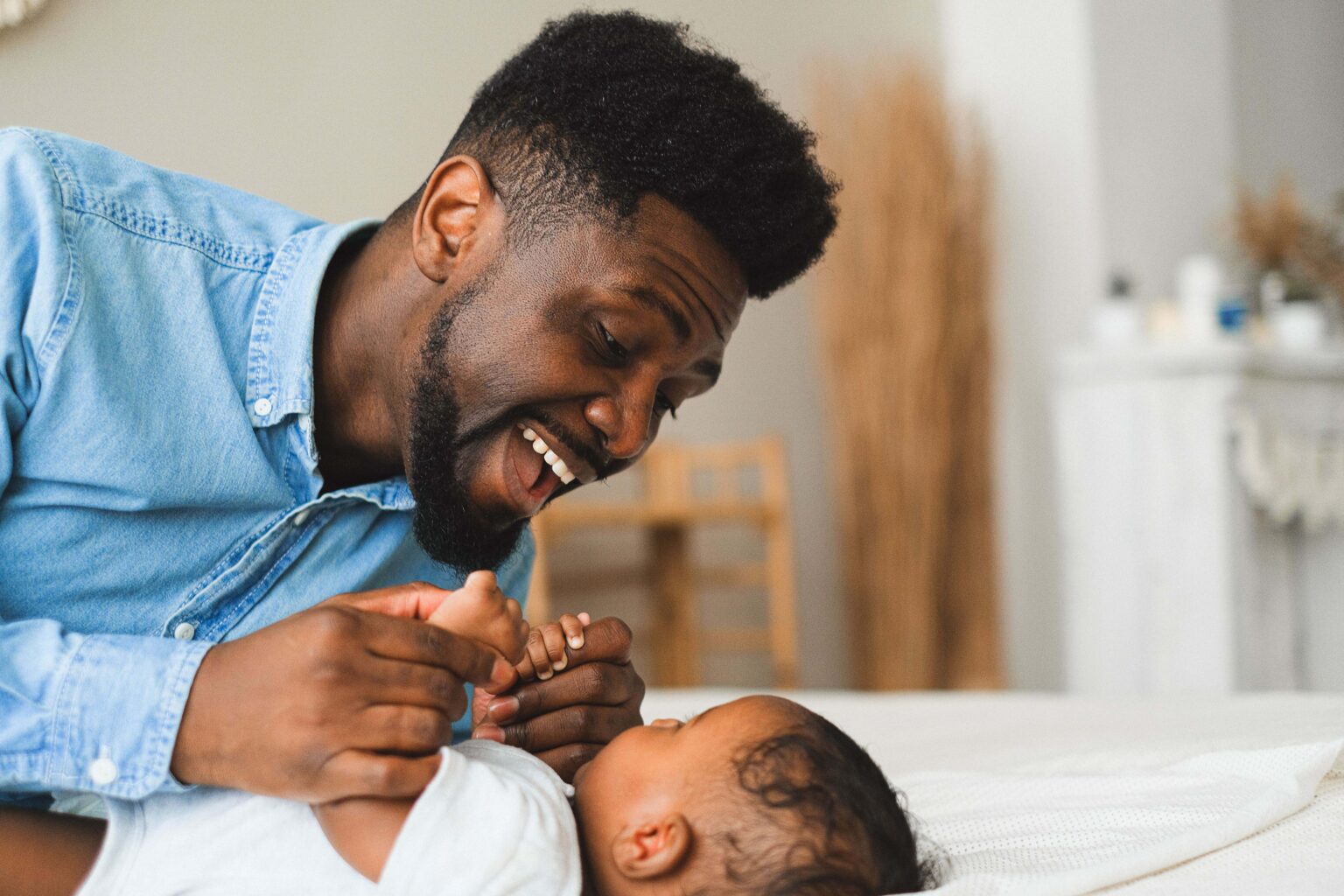
Tired of toy pressure? Discover the beautiful science of how babies play and easily decode their natural cues.
In a world filled with high-tech toys and rigid developmental checklists, it is easy to feel the pressure to turn every waking second into a learning milestone. But child-development expert Laurie Hollman, PhD, offers a deeply reassuring alternative: the most powerful developmental tool in your baby’s world is simply you. In this insightful excerpt from her book, Playing with Baby, Dr. Hollman explores the beautiful science behind how babies play—revealing how simple, everyday moments of eye contact, imitation, and shared quiet are exactly what your baby needs to build a healthy mind and a secure connection with you.
Many Meanings of Play
We can’t overemphasize the value of play and enjoying play without any agenda. Playing is simply what babies do! They need play, both with you and on their own from the very start of their lives.
So, what do we mean by play? Play is any activity that focuses on what mothers and fathers and other caregivers are doing as they interact with their babies. Picture your newborn playing when he is lying on his back on your knees. He looks up at you and turns his glance to your voice because you move your lips.
Some babies may even play “possum.” How? Well, you may notice when one eye is open and the other is closed. He’s alert to happenings in his immediate environment but, at the same time, cleverly not revealing all that he is aware of—even in his first few days.
Playing is your baby’s way of enjoying himself—and his way of enjoying you! After learning to recognize your voice, face, and touch and associating them with comfort, your baby responds more and more to the fun of playing, even giving you a special treat—his smile!
But what is the meaning and importance of play?
The Play Space
Play takes place in the space between the mother and baby—even before the baby clearly knows she is a separate being from the mother. Winnicott calls this space between mother and baby the potential space (1971). The potential space is the arena of creativity between the baby and the mother where play takes place.
Play develops the baby’s mind. It is a wonderful way to move your baby developmentally forward. This is the pleasure of both mothers and fathers and any primary caregiver who spends a great deal of time with the baby. While mothers are often described as “preoccupied” with their babies, fathers are described as “engrossed” (Ammaniti and Trentini 2009, 541–542). These are fathers who actively play with their babies and are sensitive to the messages their babies communicate through gestures, crying, cooing, and body language, all of which develop the baby’s mind.
Meanings of Play
In order to understand the meanings of play, it’s important and exciting to understand the inner mental processes that underlie your babies’ play. There is no formal recipe, simply a look into your infant’s inner world by careful observation. This is what researchers around the world do all the time—they observe carefully. As a parent, you can enjoy observing, too. Every parent can be an expert on their unique baby.
So, do you wonder, why do babies play?
Through repetitious play, the baby makes sense of his experiences, current feelings, and desires. He masters what he experiences, and—through the creativity of play—he reviews, advances, retreats, and conquers old and new learning.
There are multiple roles that play has for babies:
- Play communicates, expresses, and represents the baby’s experiences.
- Play is a window into the baby’s strengths and challenges.
- Play reveals the pleasures as well as the special seriousness with which babies interact with others.
- Play is used for learning to enjoy oneself as well as to cope with distress, conflict, and trauma.
- Play has the power to move development forward and enables babies to both explore and discover new possibilities, as well as communicate when they are overstimulated.
Babies play to learn, to interact, to socialize, to develop fine and gross motor coordination, and—most importantly—to discover their relationship with you, their primary caregiver.
As a parent, do not underestimate your capacity to see exchanges with your baby from his point of view.
Notice how newborns have the capacity to imitate the actions they see on your face such as smiling or sticking the tongue out. Newborns can reproduce facial expressions as part of relationship building. This is all part of play.
As Ammaniti and Trentini (2009) highlight, there is a kind of mutual coordination between a mother and her infant. Together they modulate the timing, the form, and the intensity of their emotional expressions as they interact (554). You might compare this to a dance as mother and infant move and interact together in time.
As you may have noticed, repetition is a driving force behind a baby’s play. Babies re-experience pleasure and learning opportunities as they develop along their own timeline and master their abilities and the environment.
Play can be understood as a gradual reworking—over and over—of assimilating piecemeal experiences that are too large to be assimilated in one fell swoop.
For example, you may notice how your baby’s inexperience in the world makes him vulnerable to overstimulation. At the same time, you may notice when he is flexible in his responses.
For instance, when a mother is interested in playing with a puppet with her baby for an extended period of time hoping to delight him, she may notice after a while instead of a smiling response, the baby averts his head. He averts his head to reduce overstimulation. It is a healthy coping mechanism not at all to be confused with rejecting his mother. If the mother is in tune with this response of reducing stimulation and does not interfere with the baby averting his head to regulate himself, she will then notice in a few moments he turns back to her for further play. Her empathic patience for his need to take a break returns him to a more flexible place to play again, perhaps with something new.
Anna Freud (1965) discovered that the baby’s earliest play with his mother’s body promotes the infant’s capacity for defining himself as a separate self from others. She viewed play as a source of information about the baby’s development—a window into the infant’s attempts to gain mastery in his environment. Early on the baby is learning the differences between various aspects of reality as his body and his mother’s body are used for learning.
Winnicott (1968) also referred to the special role of the body in infant play. He points out that play is pleasurable, but if it is too stimulating then play is disrupted as in the puppet play example. He highlights that play reflects the infant’s capacity to understand the differences between what his internal mind can enjoy compared with what external reality might demand.
Your infant gradually reworks his world as he plays!
Even young babies use play and other experiences to develop a sense of self as they interact with you. Motor skills, language, and brain and social development increase as they practice and mature. Play promotes growth and assists babies in preparing for future abilities and challenges in each new developmental phase. Even the infant’s earliest manipulations of his and her mother’s body are indeed, play.
Infantile activities offer pleasure while also giving a beginning orientation to the world (Solnit, Cohen, and Neubauer 1993). They provide the baby’s beginning experiences of me and not-me.
Embracing the Simple Habit of Play
Ultimately, Dr. Laurie Hollman’s insights remind us that nurturing your baby’s mind doesn’t require complex gadgets or a rigid schedule. The next time you find yourself sitting with your little one, try to let go of the developmental pressure. Simply slow down, observe their subtle cues, and enjoy the natural, unscripted rhythm of your connection.
If you want to dive deeper into these daily moments of bonding, you can explore more age-specific guidance and research-backed practices in Dr. Hollman’s book, Playing with Baby.
Find Practical Playtime Strategies in the Book
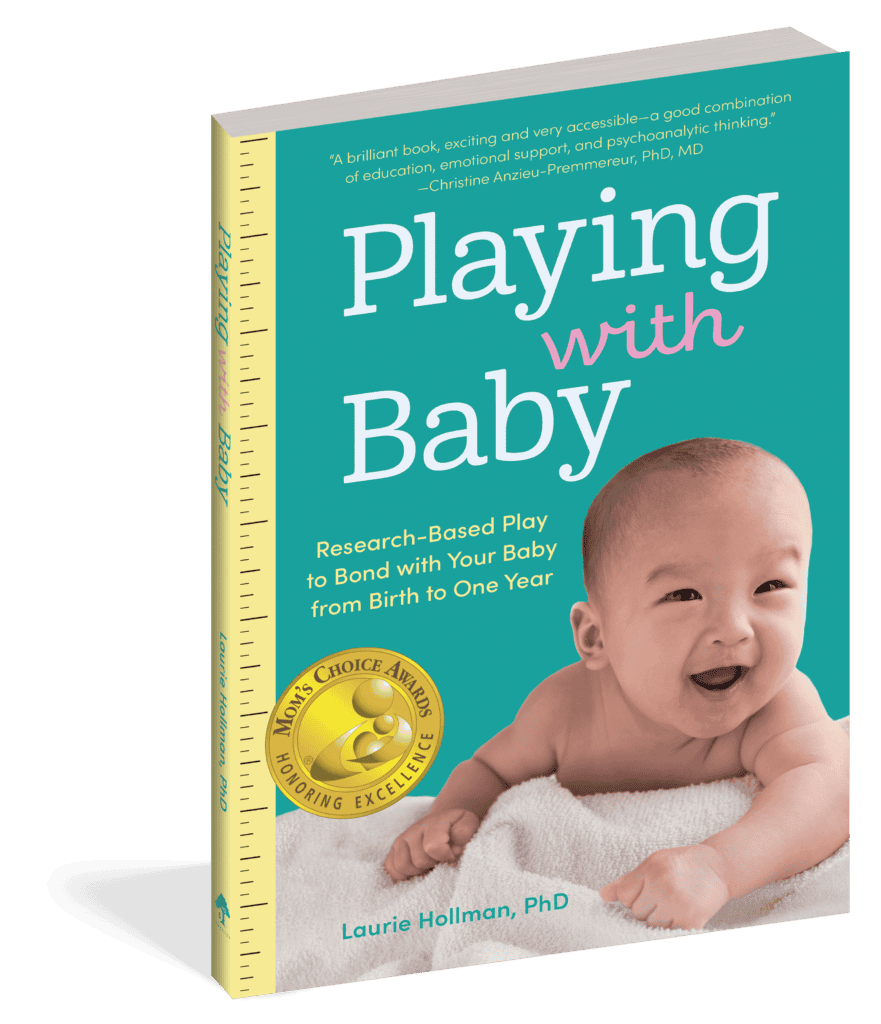
Playing with Baby
Excerpt from Playing with Baby by Dr. Laurie Hollman.