


Holiday grief feels lighter with guidance from crisis counselor Lisa Sugarman. Learn how to honor loved ones, embrace the empty chair, and move forward with love.
There’s something about the holidays that stirs everything up—the joy, the nostalgia, and the ache in our hearts. The world feels wrapped in lights and celebration, but inside, so many of us are carrying an invisible weight. Because for some of us, there’s an empty chair at the table this year.
It’s the one no one sits in anymore. The one that used to belong to your dad, your mom, your partner, your child, your friend. You can dress up the table, fill the house with music, and pour the wine, but that space stays vacant. It’s a silent reminder that grief doesn’t follow the same rules as the holidays. It doesn’t take a break just because the rest of the world is joyful.
And honestly, it shouldn’t. Because grief isn’t a sign that you’re stuck. It’s a sign that you’ve loved your person deeply and that love doesn’t end just because someone’s gone.
Moving Forward with Grief During the Holidays
We grow up being told that when someone dies, we’re supposed to mourn and move on. But I’ve never believed in that idea. You don’t move on from love like that—you move forward with it.
When my dad died by suicide, I was ten years old. I didn’t even know the truth about how he died until I was in my forties. And trust me when I say, that kind of loss reshapes you. It changes how you see the world and how you hold love.
And what I’ve learned is that love doesn’t evaporate when someone leaves. It just weaves its way into everything we do. It lives inside the jokes we tell, the recipes we recycle, the advice we give our kids, and the way we show up in the world.
Love outlives the body and becomes part of our DNA.
So when the holidays roll around, instead of trying to bury that ache or avoid it, I try to make space for it. The pain means the love is still there. And I’d never choose to give that away because that’s what connects me to the people I’ve lost.
Grief and Joy Live in the Same Space
Every holiday season, I see the empty chair that should belong to my dad. And even after all these years, it still hits me. But it’s not just sadness anymore; it’s something quieter and deeper. It’s connection.
I can feel my dad in the little things, like the sound of my mother’s laugh, his old wooden serving fork that I use to serve the turkey, and the stories I tell my now-grown daughters that start with “Remember when…”
That empty chair is part of our family now. It reminds us that love doesn’t disappear when someone dies; it just changes form. More than a symbol of who’s missing, it’s proof that they were here and that they mattered.
People assume that grief and joy can’t live in the same space, but I’ve learned that they can. You can laugh until your stomach cramps and still cry ten minutes later. You can feel grateful and gutted at the same time, which I still often do. Because that’s just how grief works—it’s layered, complicated, and alive.
The holidays can magnify both the joy and the pain. And that’s okay. You’re not obligated to choose one or the other.
3 Ways to Keep Loving Someone Who’s Gone
If there’s one thing I’ve learned, it’s that trying to shut grief out doesn’t make it go away; it just makes it louder. But when you let it in, when you make space for it, it becomes something softer.
So instead of trying to “get through” the holidays this year, try to live through them with your whole heart, broken parts and all.
Here are three ways to keep loving someone who’s gone, especially during the holidays:
1. Keep their place at the table.
Set a chair, light a candle, or serve their favorite dish. Not because you’re pretending they’re still here but because you’re honoring that they were and that they still matter.
2. Tell their stories.
Our loved ones stay alive through our words. So talk about them. Laugh about them. Share their quirks and habits, the things that made them who they were. Say their name out loud. Because silence doesn’t protect us—it isolates us.
3. Give your love somewhere to go.
Grief is love with nowhere to go, so give it a place to land. Donate to a cause they cared about or do something kind in their name. This gives that love a new purpose and direction and ensures it doesn’t fade.
Don’t Try to Fix or Finish Your Grief
Here’s a truth I wish more people said out loud: You don’t ever get over losing someone you love. You grow around it. You learn to carry it differently.
And during the holidays, when every commercial and song is screaming “togetherness,” it’s normal to feel the loss like it just happened. But that doesn’t mean you’ve gone backward; it just means your heart remembers.
So instead of trying to fix or finish your grief, listen to it. Let it remind you how much capacity for love you still have. Let it show you that pain and connection can exist together.
And if you need to cry through the main course, cry. If you need to leave the table for a few minutes, do that too. Grief doesn’t follow polite rules, so you don’t have to either.
Write Them into Your Story
The longer I live with grief, the more I realize that the goal isn’t to stop missing them; it’s to find ways to keep them as a character in your story.
That might mean watching their favorite movie every Christmas Eve. Or hanging their ornament on the tree. Or just sitting quietly by the window and talking to them in your head.
Grief is proof that you loved at all. So the more you allow yourself to feel it, the more connected you are to the person you’ve lost.
And maybe that’s the most important truth of all: You still get to love them. You still get to remember them and talk to them, laugh about them, and have a relationship with them.
That’s not being stuck. That’s being human.
Grief Is Love Finding Its Way Back to You
This holiday season, I hope you give yourself permission to feel it all—the joy, the sorrow, the gratitude, the fatigue. You don’t have to make it tidy, and you don’t have to force cheer. You just have to show up as you are.
Let the empty chair remind you that love can stretch across time. That the people we’ve lost are still part of our lives in ways that can’t be seen but can always be felt.
Grief doesn’t expire. It doesn’t have a timeline or an end date. It simply changes shape. And when you let it, it can become something beautiful.
So this year, when you sit down at the table and notice the space that’s still open, don’t look away. Look right at it. Say your person’s name out loud. And give yourself permission to feel the ache. Because what you’re feeling in that moment isn’t just loss—it’s love finding its way back to you.
Navigate Grief with Expert Help from Lisa Sugarman
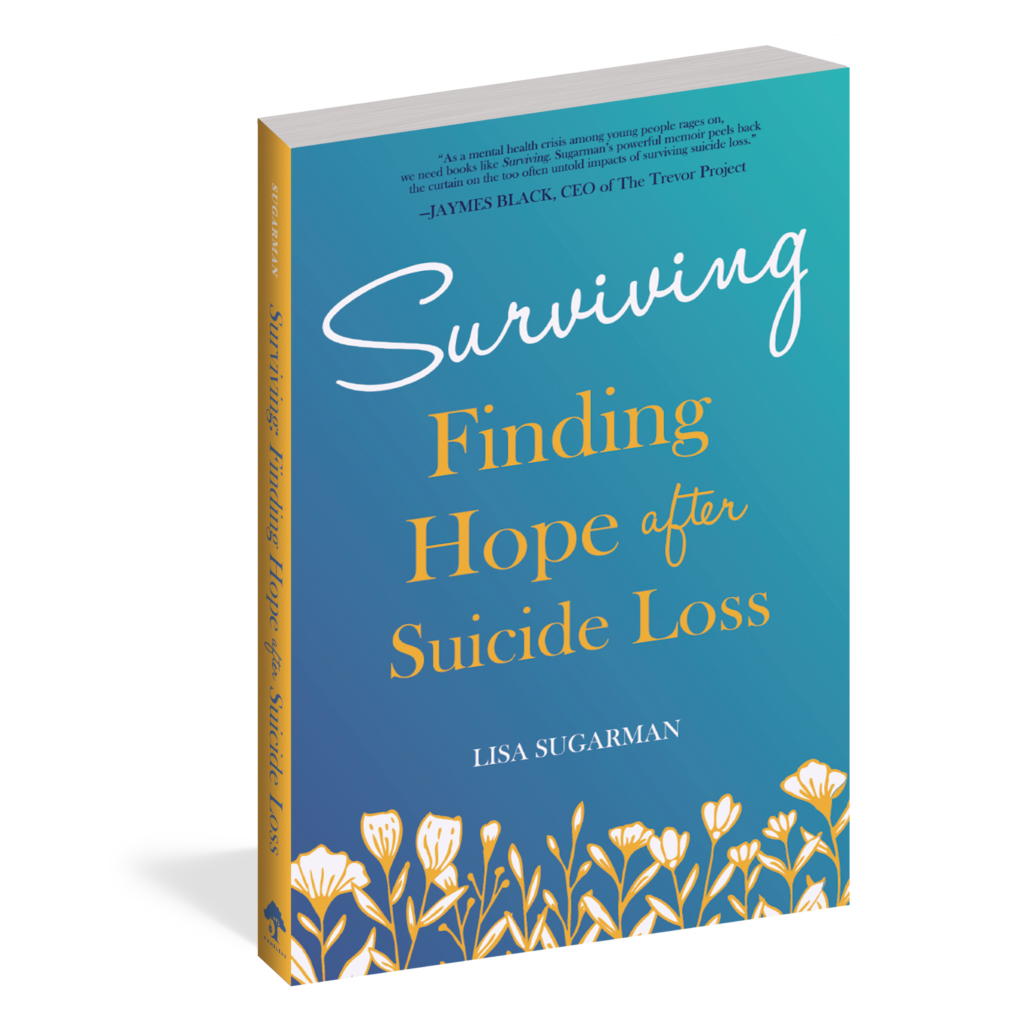
Surviving: Finding Hope After Suicide Loss
Lisa Sugarman is a three-time suicide loss survivor, author, and leading mental health advocate. She’s a crisis counselor with The Trevor Project and a storyteller with NAMI, using her lived experience to help others heal through connection and community.
She’s also the founder of The HelpHUB™, a free online platform offering inclusive mental health resources, crisis support, and treatment options for every community. Lisa cohosts The Survivors Podcast and is the author of Surviving: Finding Hope After Suicide Loss (2026) and three previous books on parenting and embracing our perfect imperfectness.
A Safe Place facilitator and board member with Samaritans Southcoast, Lisa’s work has been featured on the Mental Health Television Network and on platforms like Calmerry, Recovery.com, Healthline Parenthood, Grown & Flown, TODAY Parents, The Washington Post, and Psychology Today. She lives and writes just north of Boston.