


If mom life has got you on the edge of your seat, these four sneaky triggers could be behind your worries—learn how to HALT them fast.
Before you spiral into worst-case-scenario thinking, press pause—and HALT. In CALM for Moms, internationally recognized worry management expert Denise Marek introduces a powerful reminder that some of our most negative assumptions don’t stem from reality at all—they come from being Hungry, Angry, Lonely, or Tired. These four sneaky culprits can hijack your peace of mind and trigger a cascade of unnecessary worry, especially in the whirlwind of motherhood. As the creator of the CALM methodology, Denise Marek has helped individuals and organizations around the world overcome fear and find their center again. Now, she’s guiding moms toward calmer parenting by teaching them to recognize these emotional red flags and respond with wisdom instead of worry.
Stress less by learning to worry wisely!
I stopped at the stop sign, and I stayed there. There wasn’t a single car in sight. Yet I remained stopped at the intersection— waiting. The kids sat contentedly in their car seats in the back of the vehicle. My husband, whom I’d just picked up from the train station after his business trip, sat beside me in the passenger’s seat. I’d been home alone with our six-week-old infant and two-year-old daughter for two nights. I hadn’t had much sleep, and I was running on fumes.
As I continued to wait, my husband, confused, looked back and forth across the empty intersection. He waited a few more moments, then said, “Um, you can go now?”
I was so tired that I was waiting for the stop sign to turn into a go signal!
4 Worry-Inducing Assumptions
Motherhood comes with many awesome benefits (such as the superior mom strength that makes it possible to wrestle a pair of scissors out of the hands of a toddler who somehow has the grip strength of Dwayne “The Rock” Johnson). However, part of the motherhood package is also late—or sleepless—nights and early mornings. Lack of sleep can have real consequences. It’s important to recognize that when you’re feeling tired, you’re more likely to make negative assumptions—the kind that cause you to worry. In fact, you’re more likely to make those worry-inducing assumptions anytime you’re feeling any of the following:
- Hungry
- Angry
- Lonely
- Tired
For many years, twelve-step programs have used the acronym HALT because they understand we’re most likely to fall into behaviors from which we are trying to free ourselves when we are hungry, angry, lonely, or tired. The same goes for worry; when any one of these four are present, we are more likely to make incorrect assumptions that can cause worry.
For that reason, when you’re making negative assumptions, it’s important to HALT and check whether you’re experiencing any of these four symptoms. If one or more are present, recognize that they are likely causing your assumptions to take a downward turn. Then take care of your needs and HALT your worries using the following suggestions.
Ask Yourself: Am I Hungry?
When you’re hungry, it’s quite possible the assumptions you’re making are off base. To help you regain your perspective, acknowledge that your hunger may be driving your negative assumptions. Then remedy your hunger by eating. It’s wise to choose something healthy to eat when you’re feeling worried or stressed. Otherwise, you might end up feeling guilty about what you’ve just eaten, which may cause your worry to grow.
The key is to eat before your assumptions, thoughts, and emotions have a chance to escalate. One way to keep hunger at bay throughout the day is to include protein in every meal. Protein—meat, chicken, fish, eggs, legumes, dairy products, nuts, and seeds—can help prevent you from getting hungry and give you energy, clarity, and focus to take on the day. Have protein for breakfast? Yes and yum! Plain, nonfat Greek yogurt has twenty grams of protein in just seven ounces. Two large eggs contain thirteen grams of protein. Two tablespoons of peanut butter will give you eight grams of protein. There are so many delicious protein-rich food choices available to help you stay satiated throughout the day and prevent you from making hunger-induced assumptions.
Perhaps if they’d just tried a handful of almonds, Romeo’s and Juliet’s parents could have been catalysts to a happier ending.
One step past hunger is “hanger.” Have you ever been hangry? You know what I’m talking about—it’s that irritable or angry feeling some people get when they’re hungry. As well as being one of the leading causes of negative assumptions, hunger is also a major contributor to a grumpy mood. Have you ever said “Mmmmm” to yourself when you finally got a chance to eat? Perhaps that’s your mouth signaling to your good mood that it’s safe to return!
Ask Yourself: Am I Angry?
Anger is a powerful emotion. It can cause you to make rash decisions and ramp up the speed of negative thinking. We all feel angry or impatient from time to time, and it’s okay for you to feel the way you do. In Chapter 19, “Regulate Your Emotions,” you’ll learn a system to regain your inner peace before reacting out of anger—or any other upset emotion, for that matter. There are many effective strategies ahead in this book!
When you use anger to identify your unmet needs and then take care of those needs, anger becomes a gift of sorts.
In the meantime, try this method to calm anger-induced assumptions. First, if you’re feeling angry, acknowledge that this powerful emotion may be the culprit behind your worst-case-scenario thinking. Next, halt and take deep, calming breaths. Anger ramps up your thinking, and taking deep, calming breaths helps to slow it down. With practice, you’ll become such a chill mom that you’ll watch action movies and say to your partner, “If the Hulk would just take some deep breaths, he wouldn’t feel the need to throw that helicopter at that building.” (To which your adoring partner will murmur, “Babe, I’m trying to watch the movie.”)
After taking a few calming breaths, write your feelings down. Mind you, don’t write them down in an email and hit send! Sending an email or leaving a message in anger is definitely not a good idea—even if it feels like it will give you some release in the moment. It will just end up causing more stress for you down the road. A better way to get the release you crave is to vent your feelings onto paper, then tear it up and toss it out!
In addition to venting your feelings down on paper, recognize anger as a potential unmet need. How are you hurting? In which areas do you need more help and support? Do you need to ask your partner or kids to pitch in more around the house?
When you use anger to identify your unmet needs and then take care of those needs, anger becomes a gift of sorts. You’ll learn more about that when we get to Chapter 9, which talks about self-care. Until then, Mama Bear, when you’re feeling angry, be aware that this feeling may be the culprit behind your negative assumptions.
Ask Yourself: Am I Lonely?
Motherhood can feel lonely at times. You may feel anxious or depressed, which can cause you to withdraw and avoid spending time with others. When you become a mom, your interests change. On top of that, it can be challenging to find time to socialize. Have you ever tried scheduling a kid-free meeting with another overwhelmed mom? It’s like you’re negotiating to release hostages: “Meet me outside the library on the Thursday after Thanksgiving, and I’ll bring you a nonfat cappuccino. We’ll speak for eight uninterrupted minutes. I could not secure the helicopter you requested, but an Uber will be supplied.”
If you’re feeling lonely, acknowledge that it could be the real reason behind your what-if thinking and negative assumptions.
Sometimes just knowing the reason for our thinking can help to calm a worried mind.
Recognize your feelings of loneliness as an unmet need. Human beings need connection. We’re not meant to be alone. Yes, it can be tricky to make time for those important human connections. However, reaching out to another doesn’t have to be elaborate. Is there a friend you’ve been meaning to text, even if just for a short chat? Who could you connect with or check in on today?
Are you at a stage in parenting during which you have a little more time on your hands? Try out new hobbies and interests. Do you feel like you have a bee in your bonnet? Join an urban beekeeping collective, honey! Do you have the feeling you’re walking on eggshells? A speed-walking group might be just your crowd. What about an upholstery class? If mom life has got you on the edge of your seat, it might as well be on a really nice chair!
It’s healthy to maintain your identity in motherhood. Do what you can to build connection with others. Nurture your close friendships and foster new ones.
Ask Yourself: Am I Tired?
Do you ever reflect back on the days before you had kids, days when you thought you were tired and busy? I sure do. I didn’t realize how much sleep and free time I’d actually had before my babies were born! I wouldn’t change it for the world, and I’m guessing you feel the same. Being a mom is super rewarding. Hearing your child laugh, getting hugs, and feeling the incredible amount of love bursting in your heart makes those sleepless nights and busy days all worth it.
But on those days when you’re feeling a little fatigued—or completely exhausted—it’s important to be aware that feeling tired can trigger negative assumptions. Here are some remedies to help you combat fatigue.
Stay Hydrated
You thought the first thing I was going to tell you was to sleep more, didn’t you? Getting good-quality sleep does play a significant role in vitality and emotional well-being, but there are stages in a mom’s life where getting adequate sleep isn’t an option: the newborn stage, the my-toddler-keeps-getting-out-of-bed-every-night stage, the my-child-is-sick stage, the my-teenager-is-out-past-curfew stage. You get the picture.
Whichever stage you’re in won’t last forever, and you will survive it! But during the times you’re not getting enough sleep, there’s still something you can do: stay hydrated. Being dehydrated can cause you to feel even more tired, and feeling tired can lead to negative assumptions, so make sure you’re drinking enough water. In addition to relieving fatigue, drinking water also increases energy and flushes out toxins. When you’re feeling tired, ask yourself, “Have I met my water goal today?”
Get Adequate Sleep
If you’re at a phase of parenting in which you’re able to get sleep, do what you can to prioritize sleep. In his book Keep Sharp: Build a Better Brain at Any Age, Dr. Sanjay Gupta writes, “Chronic inadequate sleep puts people at a higher risk for dementia, depression and mood disorders, learning and memory problems, heart disease, high blood pressure, weight gain and obesity, diabetes, fall-related injuries, and cancer. It can even trigger biases in behavior, causing you to focus on negative information when making decisions.”
Focusing on negative information is certainly one of the ways in which worry grows. That’s why this section of the HALT strategy is the longest. Here are some ideas to help you get an adequate night’s slumber:
Reset your body clock.
When your body clock is feeling more like a cuckoo clock, it’s time for a reset! Go to bed and wake up at the same time every day. This really works. Your body clock will settle into a pattern, and over time, you’ll find you wake up just before the alarm goes off. I know from personal experience that it’s undeniably more refreshing to wake up naturally instead of to the sound of the alarm.
Write your worries down.
Sometimes we play a worry over and over again in our minds because we are worried we’ll forget what we’re worried about! If worry is keeping you up at night, keep a pen and paper beside the bed. If a worry comes up when you’re trying to sleep, write it down. This mental dumping process clears the worry from your mind so you can sleep. By writing your worry down, you won’t forget it, and you can take action on it—using the strategies you’re learning in this book—at a time when you aren’t trying to sleep. Avoid writing your worries in your cell phone; the lights on an electronic device can affect your sleep cycles and wakefulness, plus you don’t want to be tempted to check any text messages that might have come in while you’ve been tossing and turning.
Try magnesium.
If you’re having trouble falling asleep or staying asleep, it’s a good idea to talk with your health care provider or naturopathic doctor. There may be holistic treatments that can help you overcome this hurdle and get the sleep you require. Magnesium can be extremely effective in getting a good night’s sleep. (Here’s a note of caution, though: make sure to check in with your health care provider before taking magnesium if you’re pregnant, nursing, or on medications.)
Consider chamomile tea.
Chamomile is known for its soothing and sedative effects. This is a great tea to drink before bedtime! In addition to relaxing tense muscles, chamomile tea has been said to induce sleep. (Again, check in with your health care provider before drinking this natural-remedy tea if you’re pregnant, nursing, or on medications.)
Using these strategies will help you do what you can to get a good night’s sleep. Getting solid zzz’s each night can calm a worried mind.
The next time your assumptions are causing you to worry, HALT.
Ask yourself, “Am I hungry, angry, lonely, or tired?” If you’re experiencing even one of those symptoms, recognize it may be the reason behind your unpleasant conclusions and follow the suggestions outlined. HALT negative assumptions before they erode your inner peace.
Discover More Strategies for Addressing Your Worries
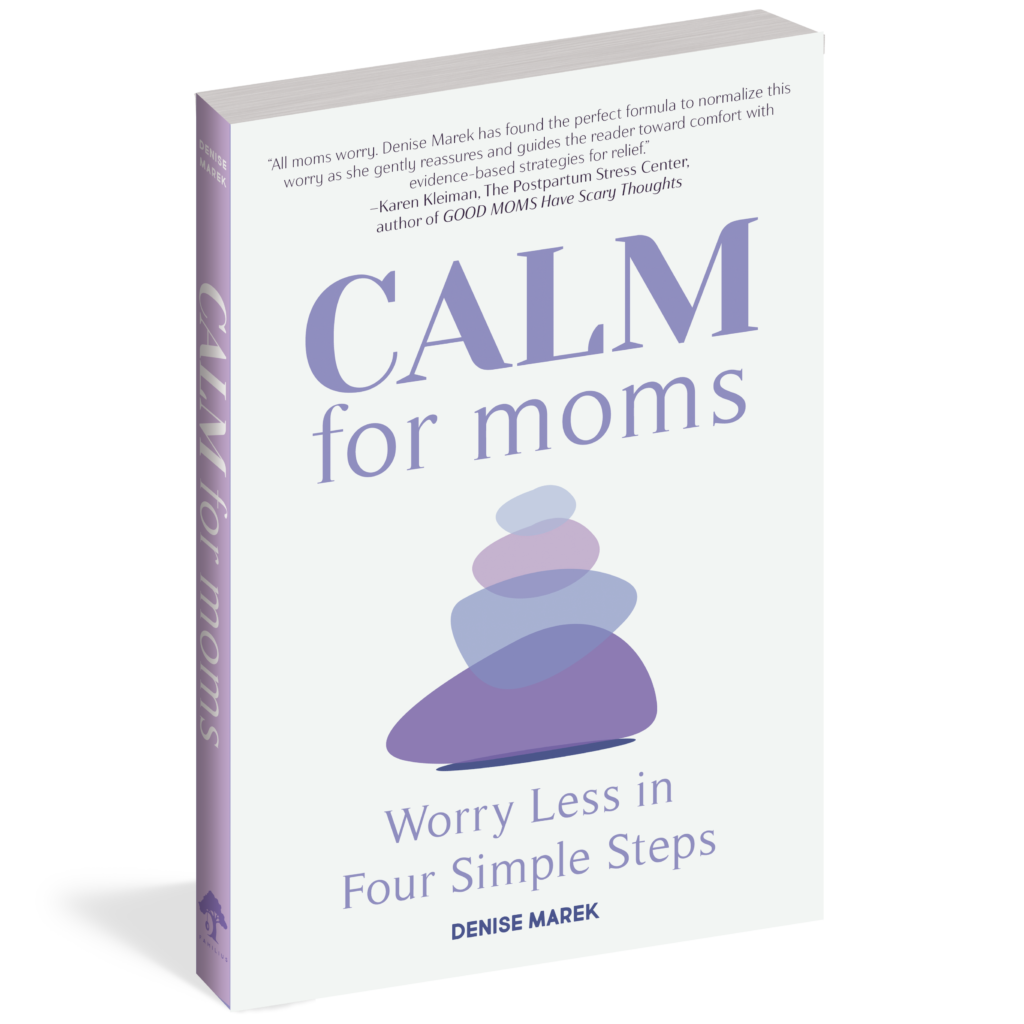
CALM for Moms
Excerpt from CALM for Moms by Denise Marek.