

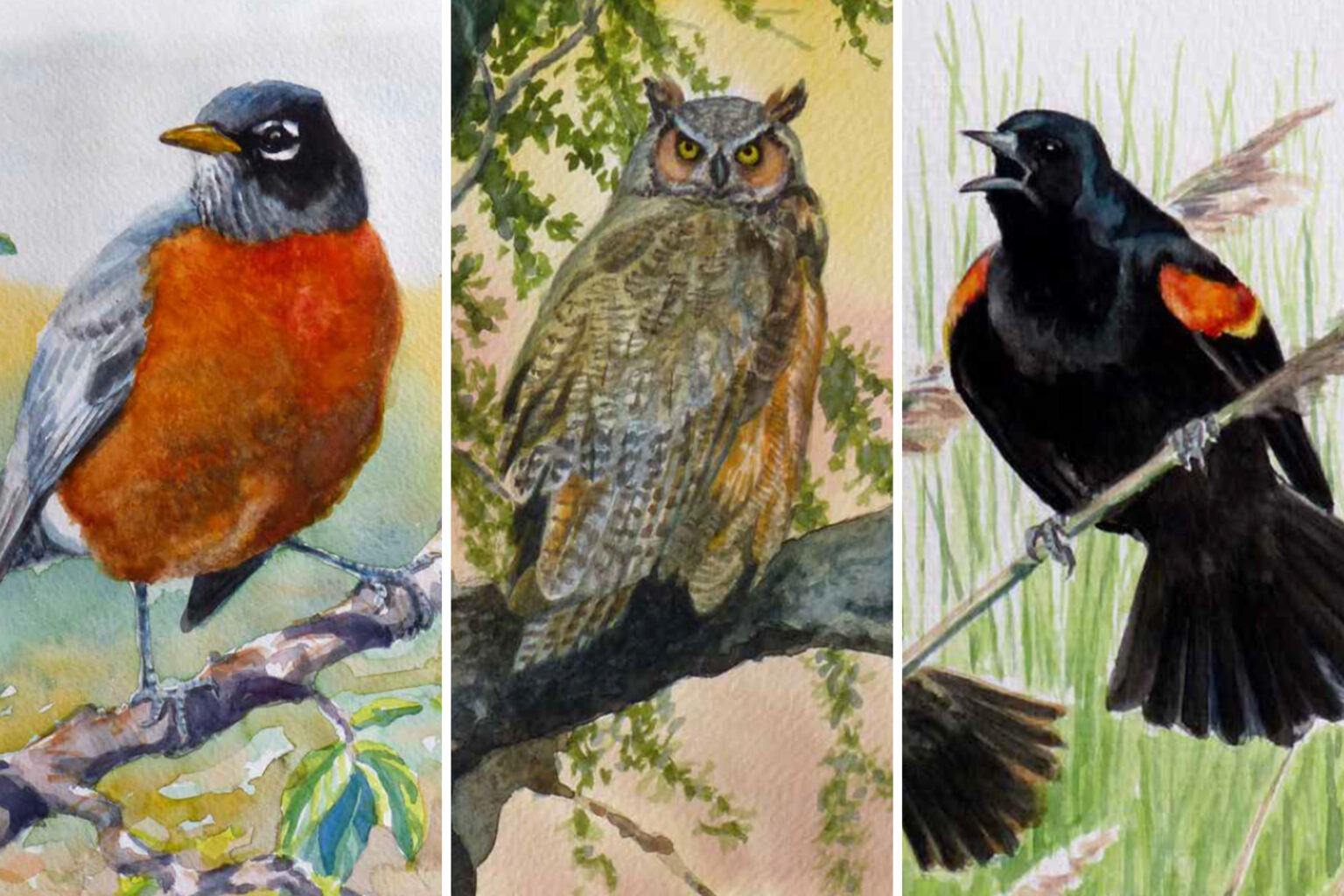
Discover 3 common backyard birds with fun facts, nesting habits, and calls in this excerpt from the ultimate birding guide, Hear Them Sing.
Whether you are listening to morning birdsong or watching a feeder, identifying common backyard birds is one of the easiest ways for young explorers to connect with nature. From the cheerful robin on the lawn to the quiet owl hidden in the trees, each species brings its own unique calls, nesting habits, and surprising behaviors to your local ecosystem. Below is an excerpt from June Smalls’s book, Hear Them Sing, highlighting three fascinating species you can spot right outside your window—along with the quick facts that make them special.
1. American Robin
Quick Facts
- Beak to tail, they are about 11 inches long with a wingspan of 12 to 16 inches.
- The American Robin is the state bird of Connecticut, Michigan, and Wisconsin.
- The oldest American Robin ever recorded was 13 years and 11 months old.
Found across North America, the American Robin is easy to identify by its orange-red chest, black cap, and grayish-brown body. Often spotted as they hop across the ground hunting for worms, these birds also eat fruit and insects.
While robins do not mate for life, they will stay with their breeding partner for the whole season. They typically breed up to three times a year between April and July. Females incubate the eggs for about two weeks. Once the baby robins hatch, both parents work to feed them, delivering food 100 to 150 times a day. After about two weeks, the young leave the nest, and the parents will continue to care for them for a few more days or weeks until they master flying.
These small birds are prey for snakes, larger birds like hawks, and cats. The baby robins that make it past their first difficult year may live to be 5 or 6, though the average lifespan of a robin is 2 years.
Birdsong
American Robins make a number of vocalizations. They are well known for their song, often described as cheerily, cheer up, cheer up. They also make short tuk sounds and have a chirring call that can sound like laughter.
If there is danger, the American Robin will make a yeep as an alarm call. Females will clack their beaks when defending their nests.
Home Sweet Home
Males find a nesting ground and aggressively protect it with song and fighting if necessary. The males bring the females materials to build their nest. They’ll create a cup-like shape with mud, then add grass, twigs, and other debris. These intelligent birds will even make mud when none can be found by getting wet and shaking over dirt or by bringing dirt and grass to birdbaths or other water sources.
On average, female robins lay 3 to 5 solid blue eggs.
2. Great Horned Owl
Quick Facts
- Beak to tail, they are about 19 to 26 inches long with a wingspan that can reach almost 5 feet.
- These owls can’t move their eyes in their sockets. To look around, they can swivel their heads more than 270 degrees. That is three-fourths of a complete rotation!
- Great Horned Owls do not have a great sense of smell and are known for hunting skunks.
One of the largest owls in North America, these birds can weigh 5.5 pounds. Their “horns” aren’t horns at all but tufts of feathers called plumicorns. Females are larger than the males, but both have the same gray-brown, black, and white coloring. Their overall colors vary from region to region. They may appear sooty brown, medium gray, or a pale tan color that helps them blend in with their surroundings.
Most active at night, Great Horned Owls use keen hearing and specialized eyes to spot rodents, snakes, and even other birds to eat. These great hunters have soft feathers that help them with nearly silent flight, so their prey won’t hear them coming. They swallow small prey whole and later regurgitate pellets (items that can’t be digested, like bones).
When nesting, incubation is handled primarily by the female. Eggs hatch after 28 to 35 days. Both parents feed the nestlings. The young birds may venture out from the nest as early as 5 weeks, but don’t fly until about 9 or 10 weeks old. Parents will still tend to the young for several months.
In the wild, the Great Horned Owl can live 20 to 30 years. Captive owls can live
as long as 50 years.
Birdsong
While not a songbird, the Great Horned Owl has one of the most recognizable calls across North America: the steady hoo, hoo-hoo, hoo, hoo. They also whistle, bark, shriek, hiss, and snap their beaks to make a clacking sound.
Home Sweet Home
These birds usually reuse old stick nests built by other bird species, but occasionally they make their home in nest boxes or holes in trees. The nests vary in size and are sometimes lined with bark, leaves, feathers, fur, or trampled pellets.
Great Horned Owls have a clutch of 1 to 4 round eggs, which are dull white with a rough surface.
3. Red-Winged Blackbird
Quick Facts
- Beak to tail, they range from 6.5 to 9 inches with a wingspan of 12 to 15.5 inches.
- Red-winged Blackbirds may reach flight speeds of up to 30 miles per hour.
- Red-winged Blackbirds roost in flocks year round. In summer, they roost in small numbers in their breeding grounds. Winter flocks can be huge, sometimes containing several million birds, including other blackbird species and starlings.
The Red-winged Blackbird is found almost everywhere in North America except for the northernmost parts of Canada and Alaska. The males are easy to identify, with the glossy black body and red-and-yellow shoulders that the species is named for. The females, however, are a streaky brown, giving them the appearance of a large sparrow.
Red-winged Blackbirds eat mostly seeds, but will also eat insects, berries, and small fruits. They often feed in large flocks, and at these times, males will hide their shoulder patches to avoid conflict.
To attract a mate, the male fluffs out his feathers and spreads his tail. He’ll show off his red shoulder patches and sing. Older males with brighter shoulders have larger territories and attract more mates. Males fiercely defend their territories. They will chase off other males and intruders, even large animals like horses or people.
The female incubates the eggs for 10 to 12 days. Both parents will feed the nestlings, though the female will do more. The young leave the next after about two weeks. While the oldest recorded Red-winged Blackbird was 15 years old, the average lifespan is just over 2 years.
Birdsong
Red-winged Blackbirds have musical voices and are known for their o-ka-leeee call. They also chatter and whistle—both clear whistles and burry alarm whistles. Common calls from both males and females are a simple check and an intense alarm call of chak chak chak.
Home Sweet Home
Nests are built by the females in marsh growth, like cattails, dense grass, bushes, or saplings near water. The nest is a bulky open cup made of leaves, reeds, and roots. The female builds it and lines it with fine grass.
The female will lay 2 to 4 pale blue-green eggs with black, brown, or purple markings mostly on the larger end.
Hear the Songs of 11 More Common Backyard Birds
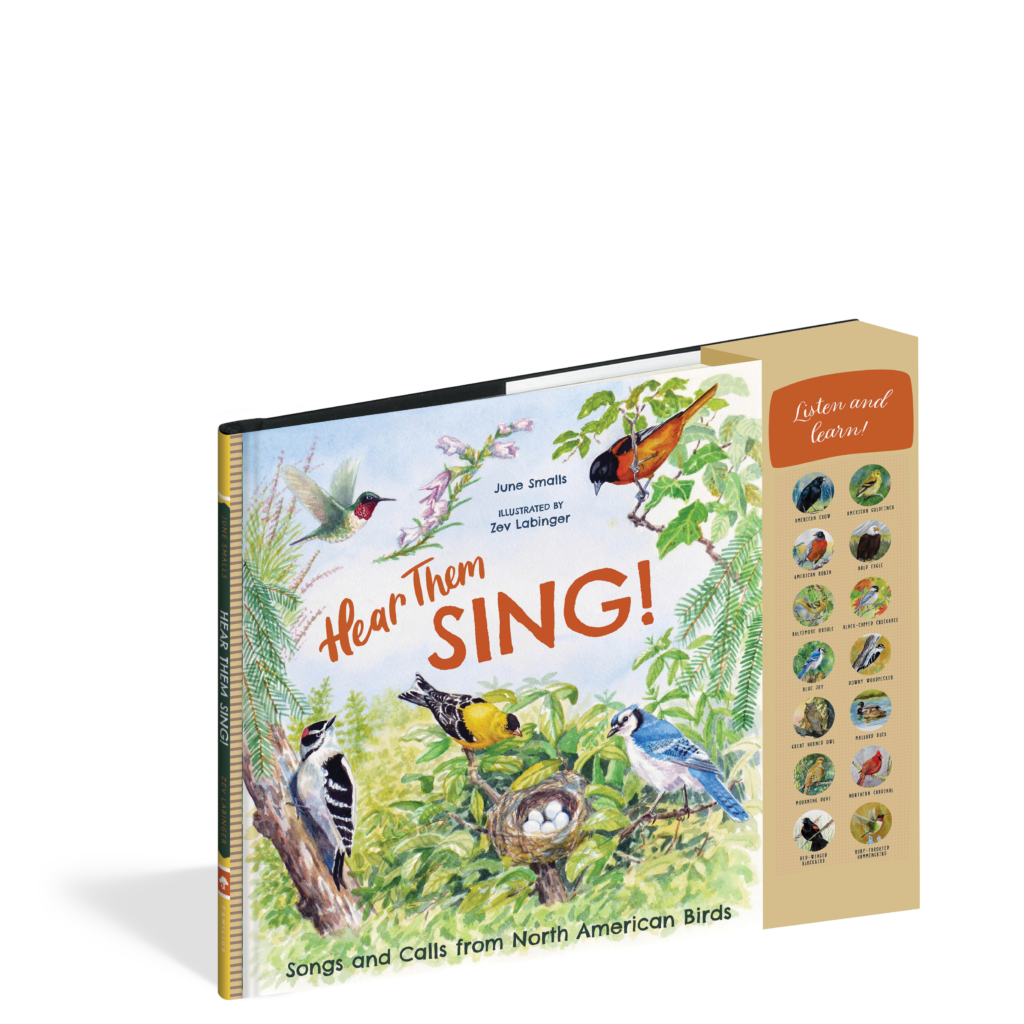
Hear Them Sing
Excerpt from Hear Them Sing by June Smalls.