

Discover four simple exercises to explore color in nature with this excerpt from Kimberly Collins Jermain’s book, Nature of Color.
Most of us spend our daily lives surrounded by artificial light and synthetic environments. This makes it easy to lose touch with how rich, subtle, and dynamic hue truly is in the wild. If you want to break out of that routine and train your eyes to see subtle context shifts in the wild, the key is knowing where to start.
In this excerpt from Nature of Color by Kimberly Collins Jermain, you’ll discover 4 simple exercises to explore color in nature that will transform the way you observe and interact with the natural world around you.
Field Study
What makes you curious about how sunlight works in the environment? What excites your imagination in nature? It takes some planning to figure out the answers. Your natural habitat is an unparalleled laboratory where you can begin your investigations of color. You must first initiate a new habit, or place value on an existing one, of getting out into nature regularly, especially when there isn’t a well-worn path outside your door. To learn color principles that will change your view, reacquaint yourself with what was once your playground and can be again.
Our contemporary lives are for the most part lived within artificial atmospheres framed by man-made light sources and synthetic structures, as well as air, light, and sound pollution. Your quest to use color with three-dimensional impact begins when you consciously take leave of the built environment, which is designed to keep you at a safe distance from natural elements. If you are ready to take a closer look at what’s going on in the wider world that speaks to your spirit, here are some tips on how to get there.
See for Yourself
We see color with our frontal vision. Our eyes see and then our brains understand color in seconds. This very notion is important to work into your color practice. It takes only a movement, or a quick comparison to another color, such as white, to make the most accurate assessment with our eyes. Nature of Color provides blank white drawing paper to be used as a backdrop to see color more accurately on the trail, as well as for filling with notes and drawings. You will soon be convinced that context dictates what you see, and how helpful it is to have some kind of white material on hand when you scout for color.
1. Try This at Home
Materials: white paper, three objects of same hue
On a white piece of paper, line up three small objects of the same hue, though not alike. Take the darkest one away. What happens to the color of the two remaining objects? How would you describe each color? Write down adjectives to express what you are seeing.
Now, take the same three objects and replace the darkest item with something black. Say out loud what has happened to the two remaining objects. Do you notice any new tones that were not visible before?
(For the record: Take a photo with your phone of the objects on the white paper to revisit the example again another time and see/record what you think.)
2. Try This on the Trail
Materials: Nature of Color
On your next hike, gather three leaves from different plants along your walk. Place the three specimens on the white page in Nature of Color. Take the darkest away and say out loud what has happened to the other two specimens.
Now replace the darkest leaf of the remaining pair and say out loud what has occurred, being specific about any tonal changes. Place something black along the trail’s edge and see what happens to the foliage that is now its context. Is black a standout? Does it blend with the foliage?
(For the record: Take a photo with your phone of the objects on the white paper to revisit the example again another time and see/record what you think.)
Caution: When you first arrive at the location of your hike, take a look at the sign posted at the trailhead to identify the poisonous plants in the immediate area.
Color in Context
The following visual experiments give you an opportunity to test how humans view color through comparison, recording the light of the world in their consciousness with the darkest color only as dark as the other objects are lighter.
3. Try This at Home
Take an object, put it in the sunlight of a window, and take note of what has happened to the color. Now quickly remove it from the window light and place it in a shadow. How has the move away from the sunlight changed what you see? Write down your impressions.
4. Try This on the Trail
Place the darkest leaf from your collection into the full sun on the path and take note of the color. From the full sun, now move the same leaf to the shade near your place on the trail. What has happened to its color?
Found Color
Where do you begin an exploration of color in nature when there are so many amazing views to draw your attention and stimulate your passion for hue? I suggest looking for examples of local color in the berries that you find on a bush beside you or the seaweed at the beginning of the descent into the intertidal zone of the sea. Found Color borrows from the artist tradition of taking something found (AKA “Found Object”) and using it to inspire and inform or to be used as a material element in a current art creation.
Explore More Color in Nature with the Book
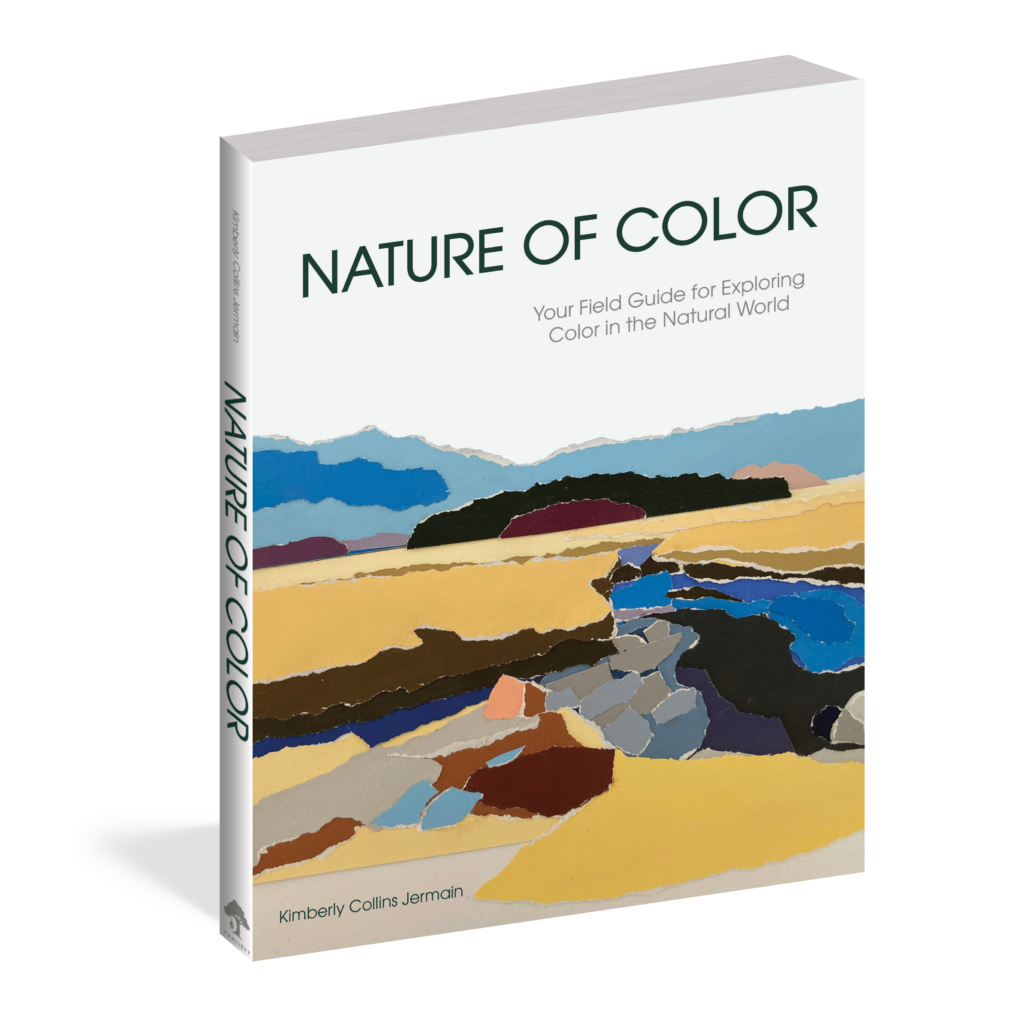
Nature of Color
Excerpt from Nature of Color by Kimberly Collins Jermain.