


Unlock the daily habits of involved dads and raise confident kids through simple, playful routines.
Let’s be honest: Nobody hands you a manual when you become a dad. One day you’re figuring out how to install a car seat without losing your temper. And the next? You’re trying to figure out how to raise a tiny human who is ready to take on the world.
Broad parenting advice often points to grand gestures—like planning the perfect Disney vacation or coaching the little league team. But the real magic happens in the ordinary, messy rhythms of everyday life. Raising confident kids isn’t about being a perfect superhero; it’s about a few simple daily rhythms.
By weaving a few intentional routines into your day, you can build a massive foundation of security for your kids without adding a ton of stress to your plate.
1. Commit to 10 Minutes of Imaginative Play
Many dads fall into the trap of thinking they need hours of uninterrupted free time to properly bond with their kids. When you’re wiped out after a long day at work, the thought of playing can feel like a daunting chore. But building deep confidence in your child doesn’t require an entire afternoon—it just requires a focused, intentional window of time.
In his book Making It Up, author and theater educator Christopher Mannino shares that just 10 minutes of daily imaginative play can completely transform your relationship with your child. The secret weapon? Borrowing the core rule of improv comedy: “Yes, and.”
“Kid runs in and their arms outstretched and says, ‘Dad, I’m flying.’ And what’s your instant reaction? . . . Because most people in that moment are like, ‘Okay, you have fun with that,’ or, ‘I’m gonna keep cooking.’ . . . But what happens if you say yes?”
— Christopher Mannino, from the Helping Families Be Happy Podcast
When you look at your child and say, “Yes! And watch out for that rogue hot air balloon ahead—turn left!” you instantly validate their reality. This simple act tells your child that their ideas have value, their creativity is awesome, and their dad is thrilled to step into their world. That kind of validation is rocket fuel for childhood confidence.
How to Practice “Yes, And” Play
- Accept the Premise: Whatever your child says is happening, it is happening. If the couch is lava, it’s lava.
- Add to the Story: Introduce a fun new detail to keep the momentum going.
- Keep it Brief: Set a timer for 10 minutes, give it 100 percent of your energy, and then transition out.
These micro-moments build lifelong memories. During the pandemic, Mannino and his son used these techniques to turn a stressful first day of homeschooling into an imaginary rocket ship trip around the solar system. Years later, they still sing the song they made up during that 10-minute game.
2. Use the “Anchor” Technique to Stay Grounded
You can’t raise a confident child if you are constantly distracted, irritable, or mentally scrolling through work emails. Kids are hyper-aware of parental burnout. When a dad is physically in the room but emotionally a million miles away, kids pick up on it.
To combat this, involved dads use what method actors call an “anchor” technique—a tool Mannino advocates for to help parents manage stress and regulate their own emotions before engaging with their kids.
An anchor is a vivid, positive, recent memory that you deliberately pull up in your mind when you feel overwhelmed. It acts as an emotional reset button. For example, Mannino uses a specific memory of watching polar bears at the Munich zoo with his son to instantly tap into a feeling of calm and happiness.
Before you walk through the front door after work, or right before you sit down for your 10 minutes of play, take 30 seconds to lock into your anchor. Visualizing a moment of pure, uncomplicated happiness with your family floods your system with patience. It shifts your mindset so that parenting stops feeling like an obligation and starts feeling like a privilege. When your kids see a dad who is calm, grounded, and genuinely glad to see them, it gives them the confidence to be themselves.
3. Master the “Established Pivot” to Handle Resistance
Confident kids are allowed to have big emotions, but they also need to learn how to navigate transitions and frustrations without a total meltdown. Involved dads don’t meet a child’s resistance with anger or rigid authority; instead, they use creative redirection to help their child’s developing brain get unstuck.
This is known as an “established pivot.” When a child is hyper-focused on a negative emotion or resisting a daily chore (like putting on shoes, brushing teeth, or practicing an instrument), a pivot injects a fresh, playful perspective to transform the experience.
Consider an example shared in the podcast episode: Instead of turning violin practice into a massive power struggle between mother and son, the mom pivoted. She dressed up as an entirely different character to teach the lesson. Suddenly, a tedious task became an imaginative game.
Dads can use the established pivot daily:
- The Shoe Struggle: If they won’t put on their shoes, turn the shoes into rocket boosters that need to be locked into place before blast-off.
- Bedtime Resistance: If they refuse to brush their teeth, pretend to hunt for hidden treasure monsters lurking on their back molars.
By pivoting, you teach your child flexibility. They learn that roadblocks can be overcome with a little creativity and a shift in perspective, giving them the emotional resilience they need to tackle difficult tasks independently.
4. Set Firm, Loving Boundaries
There is a common myth that being an involved, playful dad means saying “yes” to every single demand your child makes. In reality, a total lack of boundaries breeds anxiety, not confidence. Children actually crave boundaries because boundaries define the edges of their world, letting them know exactly where they are safe.
Involved dads know how to protect their own time and energy by setting clear, healthy limits. You do not have to engage in imaginative play every single time your child asks. In fact, trying to do so is a quick path to parental burnout.
Healthy Boundary Scripts for Dads
- “I want to play space knights with you, but right now I need to finish making dinner. Let’s set a timer for 10 minutes of play right after the dishes are done.”
- “My energy is a bit low for running around right now, but I would love to sit here on the couch and listen to you tell me a story.”
When you set a boundary calmly and stick to it, you teach your child two invaluable lessons: respect for others’ limits, and emotional independence. Saying “no” with kindness shows your child that your relationship is stable enough to handle boundaries. They learn that a boundary is not a rejection, which gives them the confidence to establish healthy boundaries in their own friendships later on.
5. Engage in a Quick Nightly Reflection
The final habit of highly involved dads happens when the house is finally quiet and the kids are asleep. It is the habit of daily reflection.
It is incredibly easy to let days, weeks, and months blur together in a haze of routines, carpools, and bedtime schedules. Involved dads counter this by taking just two minutes at the end of each day to mentally review their interactions with their kids. They ask themselves simple, grounding questions:
- Did I look my kids in the eye today when they spoke to me?
- Did I offer them a genuine compliment that focused on their effort rather than just their achievements?
- What is a positive memory from today that I can save as an “anchor” for future stressful moments?
This habit keeps you intentional. If you had a rough day and lost your temper, reflection allows you to acknowledge it and make a plan to repair the connection tomorrow. If you had a breakthrough moment during your 10 minutes of play, reflection helps cement that memory, turning it into a permanent brick in the foundation of your family’s history.
Small Habits, Lifelong Returns
Raising confident children does not require perfection. Nor does it require you to be a flawless leader, a boundless source of energy, or a master entertainer.
As Christopher Mannino’s method proves, it is about the willingness to show up, center yourself, and say “yes, and” to the little moments of connection that present themselves each day. By dedicating just 10 minutes to active play, anchoring your emotions, pivoting through resistance, upholding boundaries, and reflecting on your progress, you become the involved dad your children need.
The confidence you instill in them today through these simple daily habits will be the armor they wear for the rest of their lives.
Discover Your Dadhood Support Team
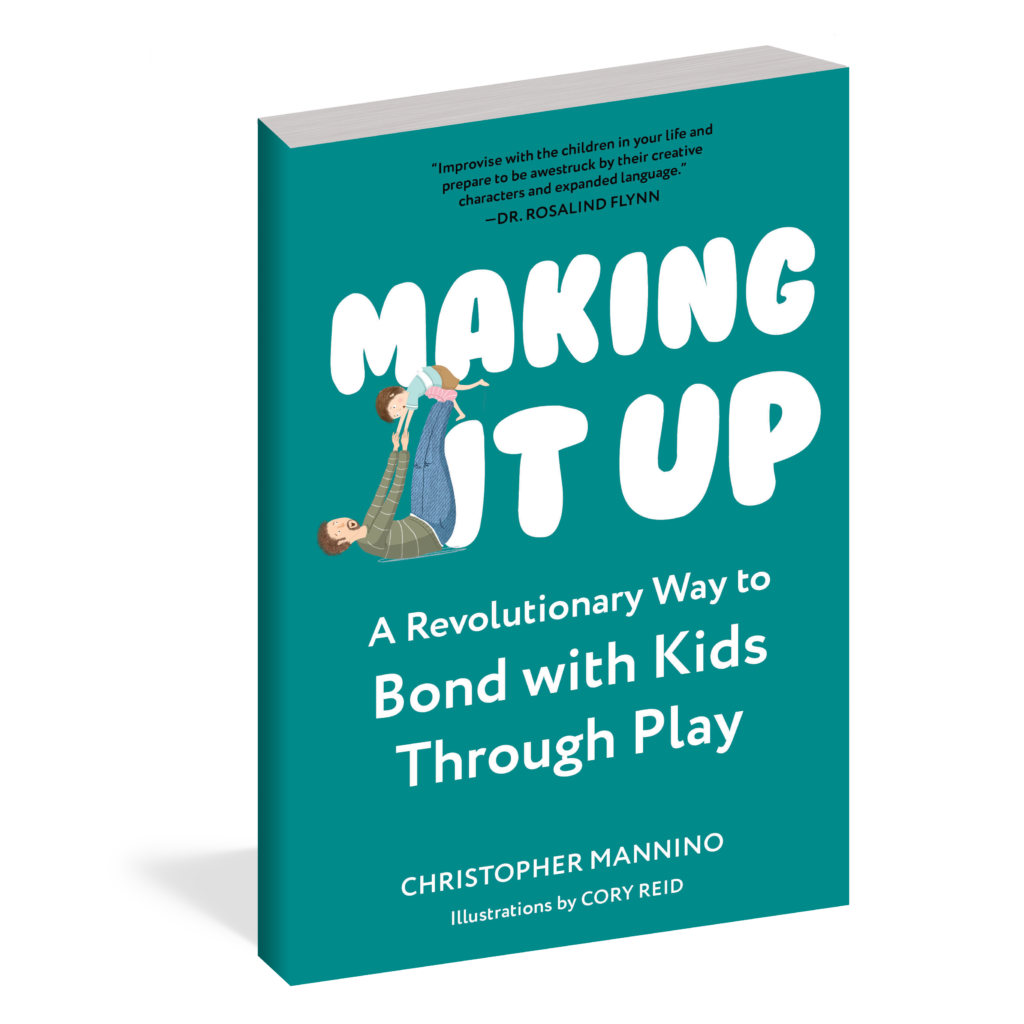
Making It Up

Dad Mode

Rookie Father
Shaelyn Topolovec earned a BA in Editing and Publishing from BYU, worked on several online publications, and joined the Familius family. Shae is currently an editor and copywriter who lives in California’s Central Valley.