

Melissa Dalton-Bradford explores travel, shared stories, and loss. Discover how these experiences redefine what it means to be a global citizen.
In her memoir, Global Mom, Melissa Dalton-Bradford journeys across borders, through languages, and into the heart of cultures. This lifetime of travel informs her upcoming book, How to Save Democracy, growing from more than a thick passport.
The following excerpt, taken from the final chapter of Global Mom, explores the philosophy of the “table.” A space of hospitality and shared humanity. Here, Dalton-Bradford redefines what it means to be a citizen of the world. She suggests our most “global” experiences aren’t just where we have traveled. They are how we carry our stories and our losses into the company of others.
In Medias Res
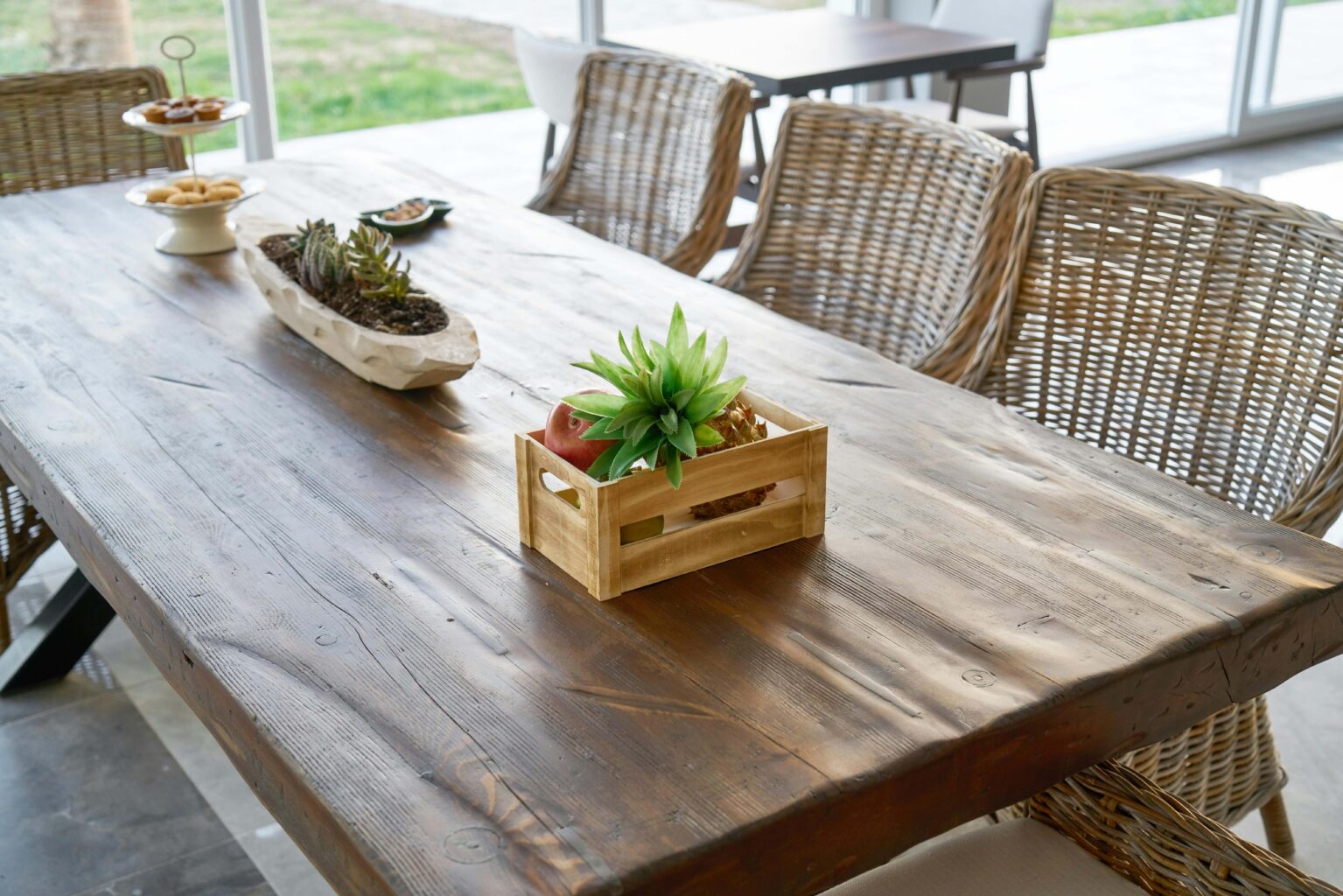
Leaning on our big pine table as I work on my laptop, I can’t help but be taken back to that first “abroad” Christmas spent in a scolding winter outside of Oslo. That’s when we found this burly plank of hand-selected, hand-carved pine, our langbord. That’s when its story and our global story began. This Christmas—like that Christmas and all the Christmases in-between—will revolve around the wooden comfort of this Norwegian farm table; or better said, it will be centered on the people we gather around the table’s edge.
All those who will come to our table this year will be new to us. All but strangers at first, some of us will become friends, some close friends. And some friendships will evolve into permanent fixtures in our small cosmos as we move ahead in this country, and maybe—possibly, almost certainly one day—from this country. Their elbows will rest on the table’s striated surface with its eye-like knots staring up at us. Their hands will pat its beveled edge, they’ll rub their DNA into its fibers the way our new friends in Norway did. And those in France. And in Germany. And so on, and so on.
. . . Being a “Global Mom” goes far beyond being a globe-trotting lady with kids, although I suspect that’s pretty much what’s awaited from a memoir wearing this particular title.
True, facing and then falling in love with many cultures is a chief part of being what we call “global.” It’s a multi-colored part of it, a demanding, invigorating, humiliating, and sometimes, as I’ve shown, a downright hilarious part of it. It’s enlightening, too, straight-up titillating at times, and I hope that goes as much for reading it as it does for living it. Because, really, who doesn’t want even a brief voyeuristic glimpse of a bigger world with its other-worldly faces, a view of this whole lush planet? And if, okay, we can’t visit the entire earth, well then we’ll settle for at least a few parts of it, and if it can’t be the literal visit, then please, we’ll take the literary one.
Still, there’s this crucial thing that I can’t possibly underscore enough.
Of all the borders I’ve crossed, of all the addresses I’ve inhabited and of all the lands I’ve been privileged to call my home, there’s but one terrain that’s defined me more than any other: that is the land of loss.
The very soil that no soul wants to visit. The one topography no parent ever wants to feel underfoot. The haunted land of loss has taught me more than any foreign land ever could. Unlike other geographies one might know for a year or two or even for decades, the landscape of loss becomes a kind of permanent overlay to whatever and wherever follows. As much as I “know” France or Germany, and as much as I feel at times quite Austrian or deeply Norwegian or even a little bit Singaporean or Swiss, no matter where I go or what language I speak, I am always and primarily a mother who buried her firstborn child.
Does everyone around my table know that truth about me? No, not everyone. What they do find out, though, if they’re willing to sit with me and talk long enough, is another truth that is, I feel, a counter-weight to being bereaved, and that is that the story we’re writing with our brief lives can never be told in its entirety, neither its length nor its fragility nor its density. By that I mean that we’re all born into the middle of a perpetual narrative, and our simple strand of personal story does not begin when our life does. In view of that, whenever we leave this place—be that at eighteen or at eighty—we are always, inevitably leaving in the middle of our story. That singular tale is interwoven in multiples of others, so our leaving will inevitably be in the middle of others’ tales.
Our stories go on. We go on. We are always in the middle of the Great, Infinite Story.
Which brings me back to this table I’m sitting at. . . . This table began long before the craftsman fell the tree, cured it, carved it, and sanded its knot-marked spine. Measure its physical dimensions, yes. Pinpoint the day it assumed its place in our home, easy. But we can’t trace its beginnings unless we claim it derived from the tree of life itself. It is generational, and by nature so are we, linked by some undying whirlygig of chromosomes if not by the ties of spirit, and if we are all that, then there will be no true end to us. There cannot ever be an end to this story or to any of our stories.
. . . Heartwood. That’s what Peter, our Norwegian carpenter, called this pine. It is the substance of this table of ours, the dense and richly colored timber that comes only from the deepest tissues of a tree.
The evergreen itself is a vigorous specimen, more flourishing and enduring than many others of the forest. I like to think as I sit and write on it and as I gather others around it, as I listen to new languages that mark the opening of yet another part of this world to my family and to me, as I finger the table’s imperfections—everyday scratches and scars, watermarks, burned spots—and as I slide my fingers along the faint pulse of its grain, I like to think that this big plank of ours is listening, too, and that it knows it is a token of the one who is absent. It is the constant thing, the ever-presence of the one who is, owing to his absence and his endless stories, also always with us wherever we are on this globe.
Join Melissa Dalton-Bradford at Her Global Table

Global Mom

On Loss and Living Onward

How to Save Democracy
Excerpt from Global Mom by Melissa Dalton-Bradford.