


Author Lisa Sugarman shares her story of suicide loss, navigating loneliness and hypervigilance to find a life of purpose and hope.
Lately, as the release of my memoir Surviving: Finding Hope After Suicide Loss approaches, I keep coming back to the ten-year-old girl I used to be.
The girl who lost her father to suicide the summer she turned ten.
The girl whose life quietly split into a before and an after the day he died.
Looking back now, I can see how that moment changed the trajectory of my life in ways I couldn’t possibly have understood at the time.
But soon after my father’s death, a powerful shift happened inside me. A strong sense of hypervigilance settled into my personality, and it’s been with me ever since.
At ten years old, most kids still live in a world where the adults around them feel permanent and invincible.
That illusion shattered for me overnight, and I became acutely aware of the fragility of life—of how quickly the people we love most can disappear. I was also suddenly the only kid I knew without a father. It felt like I was in a club of one. No one around me really understood what had happened, and I didn’t have the language, the capacity, or the understanding to explain it. I carried a deep sense of isolation and loneliness that most kids my age couldn’t possibly understand, and I had no way of reconciling those feelings in a world where talking about grief and loss was taboo.
And in my case, I lost more than a parent. I lost my best friend.
See, when that kind of loss enters a child’s life, something inside them rewires itself. For me, it meant learning to scan every room for emotional weather. I became deeply attuned to the moods and wellbeing of the people I loved. Because when you lose a parent that young, you learn something most kids aren’t supposed to know yet—that everything good can change in a blink and that the people you love the most can suddenly disappear.
And once you know that kind of truth, you can’t unlearn it.
Hypervigilance wasn’t something I consciously chose. It was something my heart adopted in order to survive suicide loss. And it’s been surviving that way ever since.
For years, I thought it was simply part of who I was—the worrier, the caretaker, the person always watching and listening, always trying to make sure everyone around me was okay.
Only later, through therapy, did I come to understand that this heightened awareness, this watchfulness, was born from grief.
Losing my father so young didn’t just break my heart; it reshaped the lens through which I see the world.
It taught me early that life is fragile, that love can be complicated, and that silence around pain can be dangerous.
And though I couldn’t have known it then, that loss was quietly shaping the story my life would eventually tell. Because surviving loss can become its own kind of purpose. And in my case, it became the reason I chose to spend my life writing, speaking, advocating for mental health, and helping others talk openly about suicide, grief, and survival.
In many ways, the work I do today traces its roots back to that ten-year-old girl trying to make sense of a world that suddenly felt unpredictable.
A little girl who learned far too early how fragile life can be.
I didn’t choose this story. But I have chosen what to do with it.
So, if sharing what I’ve learned helps even one person feel less alone in their own grief, then every step of that journey—even the painful parts—will have meant something.
Read Along to Discover How to Turn Suicide Loss into Purpose
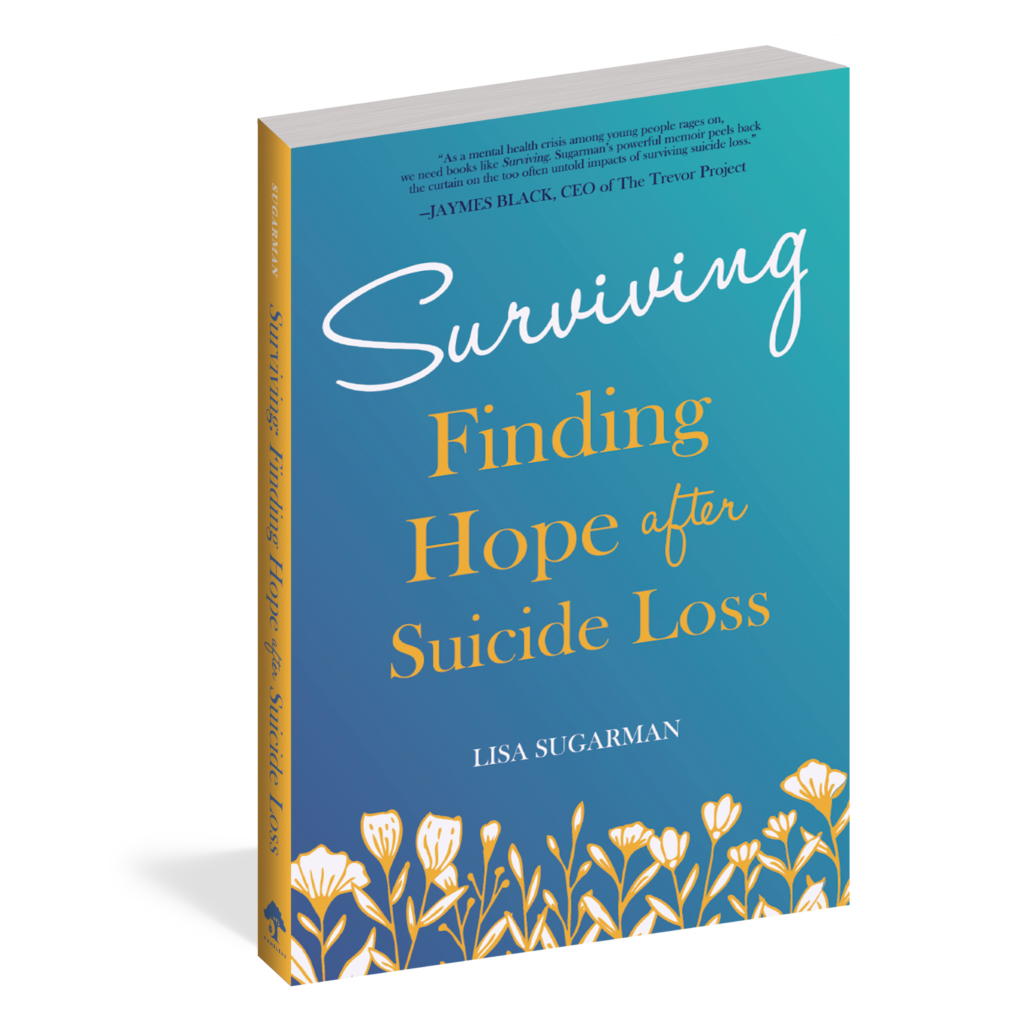
Surviving: Finding Hope After Suicide Loss
Lisa Sugarman is a three-time suicide loss survivor, author, and leading mental health advocate. She’s a crisis counselor with The Trevor Project and a storyteller with NAMI, using her lived experience to help others heal through connection and community.
She’s also the founder of The HelpHUB™, a free online platform offering inclusive mental health resources, crisis support, and treatment options for every community. Lisa cohosts The Survivors Podcast and is the author of Surviving: Finding Hope After Suicide Loss (2026) and three previous books on parenting and embracing our perfect imperfectness.
A Safe Place facilitator and board member with Samaritans Southcoast, Lisa’s work has been featured on the Mental Health Television Network and on platforms like Calmerry, Recovery.com, Healthline Parenthood, Grown & Flown, TODAY Parents, The Washington Post, and Psychology Today. She lives and writes just north of Boston.