

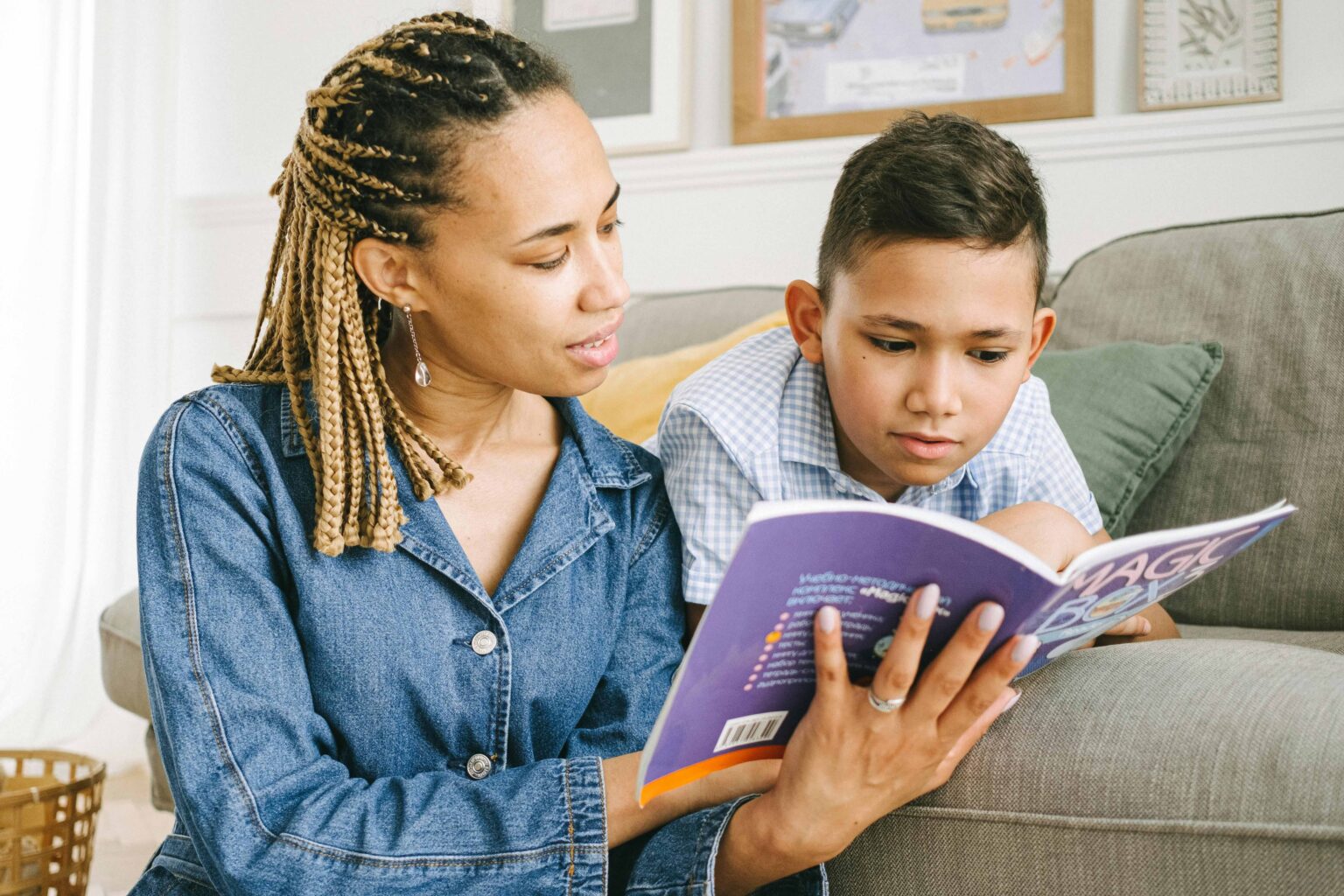
Miss your bedtime stories? Learn how reading with big kids keeps you connected through the independent reading years.
For many parents, the twilight of early childhood is marked by a subtle, bittersweet farewell: the end of the nightly bedtime story. It’s a natural transition. Your children are growing, their literacy skills are flourishing, and suddenly, they are diving into chapter books all on their own. As a parent, there is an immense sense of pride—and perhaps a touch of relief—in seeing them achieve that independence.
But often, this “graduation” creates an unexpected gap. You miss that cozy, connected time. More importantly, you might realize that while your big kids can read the words on the page, they are encountering complex new themes and emotions that they might not be ready to process alone.
Reading together often gets interpreted as reading to toddlers, but we believe the habit of shared reading shouldn’t vanish when your child learns to read independently. It just needs to evolve.
Here is why that continued connection matters, and five actionable strategies you can use to reinvent the reading routine for this new phase.
Why We (Still) Read Together
It’s easy to assume the goal of reading instruction is simply fluency—being able to read quickly and accurately. But the real purpose of reading is understanding, connection, and empathy.
Middle-grade books tackle significant issues: friendship dynamics, betrayal, identity, systemic injustice, grief, and courage. Your big kids are processing these concepts for the first time. Reading together provides a safe, low-stakes environment to explore these heavy topics.
When you share a book, you are sharing a window into another life. If a character experiences bullying, it provides a natural springboard to talk about your child’s school day without it feeling like an interrogation. You are building their emotional intelligence, one chapter at a time.
Furthermore, reading with your independent reader helps bridge the gap between their decoding level and their listening comprehension level. Kids can typically listen and understand at a much higher vocabulary level than they can read on their own. When you read together, they gain exposure to richer language, complex narrative structures, and sophisticated word choices they might skip over when reading alone.
Most importantly, continuing to read together reinforces the idea that reading is a valued family habit, not a chore or a prerequisite for screen time. It keeps you connected when they start pulling away.
5 Strategies for Reading with Big Kids
Ready to reclaim that connection? Here are five ways to move beyond the traditional “I read to you” model and build a new, shared reading habit that respects your big kids’ growing independence.
1. Adopt the Tag-Team Strategy (Alternating Voice)
This is one of the easiest ways to transition into reading with independent readers. It maintains the closeness of shared storytime but shares the responsibility.
How to Implement It:
- One Page/One Chapter: You and your big kid simply alternate. “I’ll read this page, you read the next.” Or, “I’ll take chapter one, you take chapter two.” This technique helps keep your child engaged as they follow along, waiting for their turn.
- Dialogue/Narrator Swap: Identify the major characters in a story. If your child loves performing, give them the dialogue of the protagonist (the main character). You (or a sibling) can read the dialogue of other characters and the narrator’s parts. This is basically a readers’ theater, and it’s a fantastic tool for increasing engagement and understanding tone.
Pro-Tip: Use the tag-team method for books that are slightly above their independent reading level. It takes the pressure off them to tackle dense text but keeps them hooked on the high-level plot.
2. Embrace Side-by-Side (or Parallel) Reading
For kids who feel they are “too old” for shared reading, side-by-side reading is a powerful respect-driven compromise. It’s not reading to them; it’s reading near them.
How to Implement It:
- The Parallel Reading Nook: This is about establishing reading as a non-negotiable family “appointment.” Designate a comfy spot—a big armchair, or just sitting side-by-side on the couch. Both of you bring your own current book and read silently in the same space.
- The Shared Read: In a more connected twist, you and your child can read different copies of the same book, setting a goal to finish the same number of chapters by a certain day. When you finish, you can talk about it (see Secret #5).
This approach honors their space and their reading choice while satisfying your need for connection and modeling a strong reading habit.
3. Introduce the Family Audio Adventure
Who says reading has to be eyes-on-the-page? Audiobooks are an exceptional tool for families with big kids, especially when you are navigating packed schedules. Audiobooks absolutely count as reading—they develop the same language comprehension and story-structure skills.
How to Implement It:
- Car & Chore Time: Long menial tasks are the perfect time for micro-reading habits. Commit to listening to the same audiobook during the 15-minute school run, on the way to soccer practice, or while the family is cleaning the kitchen on Saturday morning.
- Multi-Generational Picks: Choose a dynamic narrator and a story that will genuinely captivate both of you. You’ll be surprised how quickly car time transforms from a battleground into a shared adventure.
4. Try the Check-In Method (Using Critical Questions)
If your independent reader has outgrown the physical closeness of reading together but still enjoys discussing stories, shift your role to literary advisor. This is less about shared reading and more about shared thinking.
How to Implement It:
- The Regular Huddle: Set a casual check-in time (e.g., at dinner, or before lights out). If your kid has their own copy of a book and you have another (or you read a few chapters ahead), use this time not just to ask “What happened?” but “Why did it matter?”
- Get Curious, Not Clinical: Avoid “school questions” like “Summarize the main conflict,” or “What is the antagonist’s motivation?”. Instead, ask open-ended questions that prompt emotional connection or debate.
5. Become a Book Club of Two
This strategy is the culmination of all the others—as if the check-in method has evolved into a structured book club atmosphere where you both approach the text as equals.
Discussion Prompts
When engaging in book discussions with big kids, your goal is to prompt critical thinking, not a book report. Here are specific prompts you can keep tucked in your pocket to spark meaningful conversations:
- “Which character do you think you’d be friends with? And which one would you absolutely avoid?”
- “What do you think was the absolute worst decision a character made in this chapter?”
- “If you were the author, how would you have ended this scene differently?”
- “This book is tackling [Grief/Bullying/Justice]. What’s one thing this story has helped you see about that that you hadn’t thought of before?”
Bridging the Gap
Your bedtime story days might be over, but your connected reading days have only just begun. The goal of reading with your big kids is to shift your role from teacher to co-reader and guide. By respecting their independence while providing a safe space to navigate the complex themes found in their books, you aren’t just building their literacy skills. You are building trust.
So, choose one of these strategies this week, grab that middle-grade novel, pick a cozy spot, and remember: The most powerful reading habit you can build as a family isn’t about how many books you read, but how you read them together.
Discover the Perfect Book for Your Newly Independent Reader

Marvin’s Monster Diary

BFF or NRF (Not Really Friends)

Middle School—Safety Goggles Advised
Shaelyn Topolovec earned a BA in Editing and Publishing from BYU, worked on several online publications, and joined the Familius family. Shae is currently an editor and copywriter who lives in California’s Central Valley.