

Explore anxiety and calm in the waves of life with insights from a surfer and a sage on fear, balance, and finding peace within the storm.
Life has a way of sending waves we didn’t exactly sign up for—some thrilling, some terrifying, and many that leave us feeling caught between anxiety and calm. In this excerpt from The Surfer and The Sage by world champion surfer Shaun Tomson and poet-philosopher Noah benShea, read along as both voices reflect on how to face fear, find balance, and ride the waves of life with courage, breath, and perspective.
Waves
The Surfer
Fierce winds whipping across water create waves. For most of the world’s six billion people, waves are to be avoided. Waves represent turbulence, danger, power, and powerlessness. Most people in coastal areas want to stay away to remain dry and safe. Surfers, however, live for waves, especially the area where waves focus their energy and break along the shoreline. For good reason, surfers call this area where a wave briefly crests to its highest point and then crashes forward with its maximum energy “the impact zone.”
The Sage
The next big thing in your life
is already on the way.
You don’t have to welcome
its arrival.
Because it is you arriving.
Because it is you heading
toward you.
That’s the wave breaking.
Destiny won’t just knock
at your door.
It will kick the door down.
And denial can’t lock the door.
So here’s the action plan.
Hope for the best and make peace
with the rest.
If reality calls, you can’t hang up.
Or refuse to answer the phone.
Being on your best behavior simply
means being your best you.
Anyone who tells you something
else is a snake oil salesman.
And remember how much of an ally
the snake was to Adam and Eve.
Anxious & Calm
The Surfer
Anxiety is a jab in the jaw for your attention; it gets your heart beating, your senses tingling, and your body ready for action—it’s a jolt of adrenaline straight to the central nervous system.
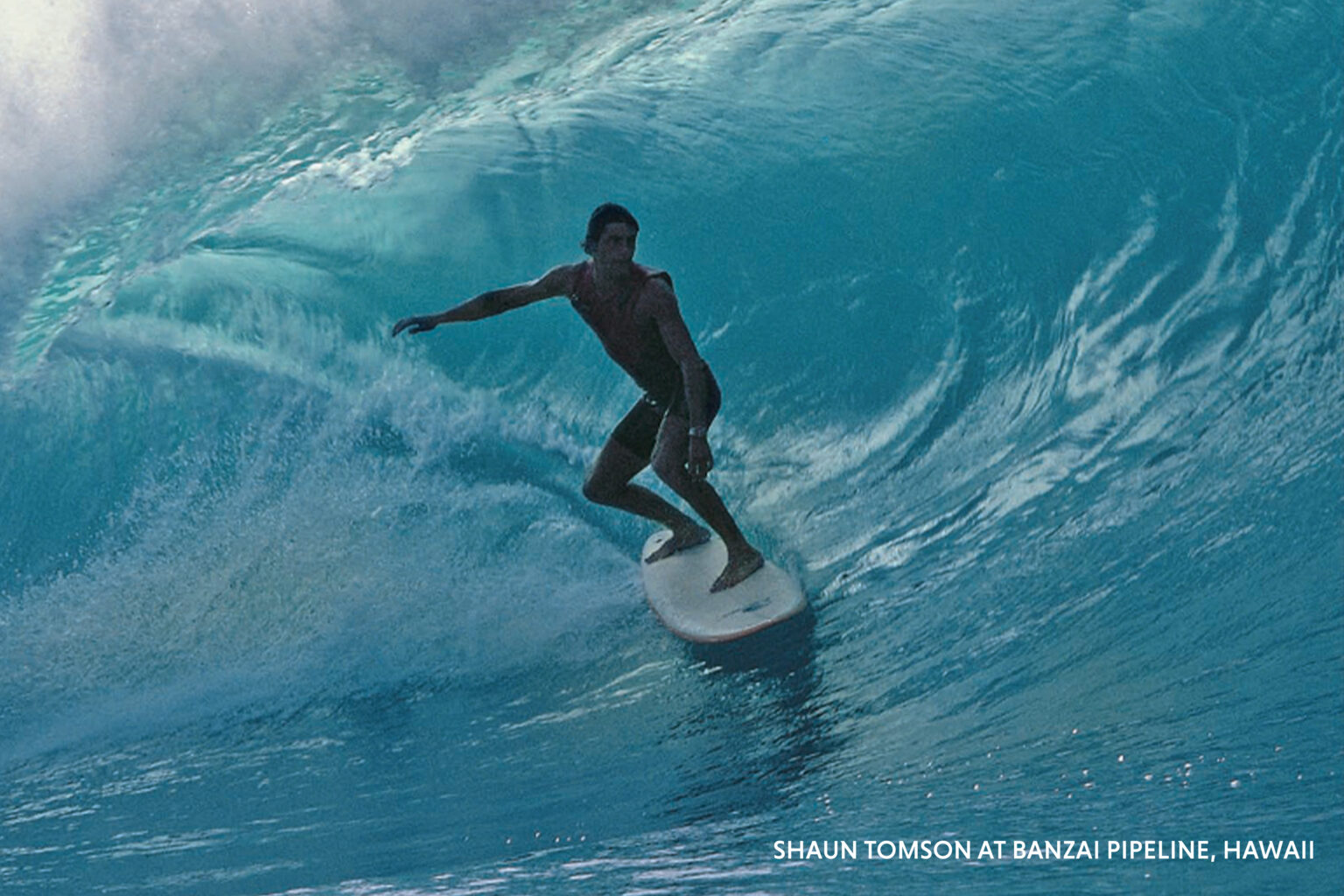
Right above my childhood bed in my father’s apartment overlooking the Bay of Plenty in Durban, South Africa, was a photo of the Banzai Pipeline—the world’s most feared wave.
I would get anxious just looking at the picture because I knew that one day I would have to go there to test myself . . .
The waves at the Banzai Pipeline break a short distance from shore, often no more than fifty yards from the coarse sand on which sit thousands of spectators during the winter competition season.
Waves are generated by storms hundreds of miles away, and these swells travel through deep water until feeling the resistance of the shallow coral reef at the Pipeline.
Waves stack up together into sets, a grouping, each about fifteen seconds apart, and then increase in size as they sweep towards the shore, their force magnified by the shallowing coral reef, changing from swells into waves, whipped ever-higher by the fierce trade winds blowing the spray upwards and out to sea like a rain squall.
As you stand on the beach watching ten- to fifteen-foot waves detonate on the reef, you can feel the concussion through your feet. Ka-boom—ka-boom. Surfers paddle for the waves, sometimes blinded by the fierce winds, and launch themselves over the edge of the wave as it rears up vertically on the reef, hoping that their forward momentum, skill, and commitment will keep them on the wave’s face and not pitch them forward into the air and a deadly wipeout.
After I would paddle out through the in-rushing waves, sped along by the out-rushing rip current, I would sit and wait for my first ride and consciously suppress the beating of my heart.
Anxiety is caused by a fear of a future occurrence—failure, injury, or even death. Anxiety is a deep dread of failing.
I discovered that anxiety can be controlled, first through breath and then with clearing thoughts. Breathe slowly and deeply, calmly and consciously, and then empty the mind, clear it of all thought. Calmness is like a warming coat for a shivering body, an antidote to fear, a clearing wind to sweep away anxiety.
I would breathe, slowly and deeply, rhythmically, and the fluid motion would still my beating heart, and, through focus and concentration, through thought and control, I would let go of being anxious and find my inner calm. I would bring the fear and anxiety of an uncertain future and potential failure to my locus of control in the present. And then I would start to paddle for the next wave, and my actions and forward motion would dispel the anxiety like a clearing and calming wind . . .
The Sage
The word “anxious” can by itself make you feel anxious. And perhaps no word is more emblematic of how people are feeling these days.
Sadly, anxiety attacks all other feelings no matter if we are talking about love, work, or even aging. Anxiety debilitates our ability to find more and not less in every aspect of our lives. Just as guilt won’t change your past, neither will anxiety improve your future.
But what people seldom realize is that anxiety is not necessarily a negative; it’s a warning system built into our biopsychology.
Perhaps think of anxiety as a balancing pole that will keep you upright on your “life” board as you witness waves that can threaten to topple you. Anxiety says, “Pay attention.” Or else you will pay later.
So how do we find our balance with anxiety? By seeing it for what it is AND isn’t. Bottom line: Don’t give anxiety too much of your attention because anxiety isn’t a boost but a caution. And anxiety won’t improve your future.
“Calm,” on the other hand, is a word that has been idealized in every religion and teaching across time. Finding that quiet safe place inside of you is about as good as it gets in life. If you doubt this for a moment, imagine a life where your roommate-for-life is anxiety.
Finding calm on your “life” board in the middle of a great ride is a wave’s meditation lifting you to a sacred place.
Choose calm when it calms your spirit, but do not choose calm when it robs you of the wild ride that you want to remember for the rest of your life. Make that decision calmly and treasure the moment. But do not confuse calm as being passionless. Or your life will be less.
When there are storms overhead,
drop down into your mind ocean and
ride the waves under your waves.
The calm in your storm
is the calm within you.
Your calm is calmly waiting.
Your calm is not at a distance
from you unless you are at
a distance from you.
—NOAH BENSHEA
Dive Deeper into Finding Calm and Courage

The Surfer and the Sage
Excerpt from The Surfer and the Sage by Shaun Tomson and Noah benShea.