


Mystery books aren’t just thrilling—they help kids sharpen their critical thinking skills, boost problem-solving, and ignite curiosity!
There’s something undeniably exciting about a mystery book. From the moment you open its pages, you’re on a thrilling adventure full of clues, twists, and unexpected surprises. But did you know that while kids are eagerly flipping through chapters to figure out “whodunit,” they’re also sharpening some pretty powerful brain skills? Mystery books sneakily sharpen kids’ critical thinking skills—while they’re too busy solving the case to even notice!
Here are eight ways mystery books sharpen kids’ minds:
1. They Encourage Active Thinking
Reading a mystery is like being a detective. The story sets up a puzzle, and the reader’s job is to solve it. Whether it’s a missing treasure, a puzzling crime, or a mysterious character, kids are constantly looking for clues and trying to connect the dots.
This active thinking is critical for their brain development. Rather than passively absorbing information, kids have to think ahead, form theories, and question everything. They’ll ask themselves: Why did that character act suspiciously? What does this clue mean? Could there be a twist coming? By continuously evaluating the story, kids are sharpening their ability to analyze situations, anticipate outcomes, and reason logically.
2. They Inspire Curiosity and Problem-Solving
Mystery books thrive on curiosity. They hook kids with unanswered questions and intriguing scenarios. Naturally, kids want to find out what happens next and will keep reading to uncover the answers. But this curiosity goes beyond just wanting to know who the culprit is—it feeds their problem-solving abilities.
Each time a new clue is presented, kids have to pause and reassess the situation. They might be wrong about their initial guess, and that’s a valuable lesson. They learn that sometimes you have to go back, rethink your approach, and consider new evidence. This kind of flexible thinking is a key part of critical thinking and problem-solving. Plus, it teaches kids resilience when things don’t go as expected.
3. They Help Kids spot Patterns and Make Connections
A big part of solving a mystery is finding patterns. Is there a repeated behavior? Is something out of place? Kids reading mystery books start to see how different pieces of information fit together to form a larger picture. This pattern recognition is essential for developing analytical skills.
Take classic mysteries like Nancy Drew or The Hardy Boys. As readers follow the young detectives, they’re exposed to a wide variety of logical puzzles. Every piece of dialogue, every action could be a clue. Kids learn to pay attention to details, identify patterns, and connect those to the overall plot. When they spot a clue that ties back to an earlier event, it’s like solving a mini-puzzle. These moments give them a real sense of accomplishment and reinforce their ability to see the big picture.
4. They Build Confidence in Decision-Making
Mystery books don’t just present problems—they empower kids to feel like they can solve them. In real life, decision-making can be tough, especially for children who are still learning to trust their instincts. But when they’re reading a mystery, they get to put themselves in the detective’s shoes, make guesses, and form their own conclusions.
This process builds confidence. Even if their initial theories don’t pan out, they learn that it’s okay to be wrong and try again. In the end, successfully solving the mystery—whether they guess it before the final reveal or not—helps kids feel more confident in their ability to analyze situations and make decisions. They see firsthand that critical thinking leads to answers, which can help them feel more capable in real-life problem-solving.
5. They Teach Kids to Explore Multiple Perspectives
A good mystery often comes with multiple suspects and viewpoints. Kids have to consider how each character’s motivations, actions, and reactions could contribute to the story. This practice of exploring multiple perspectives is key to developing empathy and understanding, both important aspects of critical thinking.
For example, in books like Encyclopedia Brown, the protagonist has to evaluate every possible suspect’s version of events. He doesn’t just jump to conclusions; instead, he carefully weighs each piece of information. Kids learn that there’s rarely one clear answer until all the facts are considered. This open-mindedness encourages them to think critically about people’s actions and motivations, both in fiction and in real life.
6. They Enhance Memory and Attention to Detail
Mystery books rely on attention to detail. The tiniest clue could make all the difference! Whether it’s a strange footprint, a hidden message, or an odd behavior from a character, kids have to keep track of small details to solve the mystery.
This helps develop their memory and observational skills. As they follow along with the story, they have to remember key facts, characters, and clues from earlier chapters. This mental exercise improves their ability to retain and recall information—a critical thinking skill that can be applied far beyond the pages of a book.
7. They Promote Creativity and Imagination
While mystery books are rooted in logic and reasoning, they also encourage creativity. The best detectives don’t just follow the obvious clues—they think outside the box! Kids are encouraged to come up with creative solutions to the mystery. Sometimes the answer is hidden in plain sight, but only if you look at it from a different angle.
Books like A to Z Mysteries or The Boxcar Children often present problems that require kids to use their imaginations to solve. This balance of logical thinking and creative problem-solving is a powerful combination for developing a well-rounded mind.
8. They Bring Critical Thinking into Everyday Life
The skills kids gain from reading mystery books extend far beyond solving fictional cases. Critical thinking, problem-solving, attention to detail, and decision-making are all essential life skills. By practicing these in a fun and engaging way, kids are better equipped to handle real-world challenges, whether it’s figuring out a tricky math problem or navigating social situations with their peers.
Plus, mystery books teach them persistence and perseverance. The characters in these stories don’t give up when they hit a dead end—they try a new approach. Kids can apply this same mindset to their everyday lives, knowing that thinking critically and staying curious will help them solve any problem that comes their way.
It’s More Than Solving a Case
Mystery books offer a world of excitement and suspense, but they’re also a treasure trove of learning opportunities for young readers. By diving into these thrilling stories, kids are not only entertained but also developing critical thinking skills that will serve them for life. So, the next time your child picks up a mystery, they’re doing more than solving a case. They’re sharpening their minds, one clue at a time!
Dive into These Mysteries with Your Family
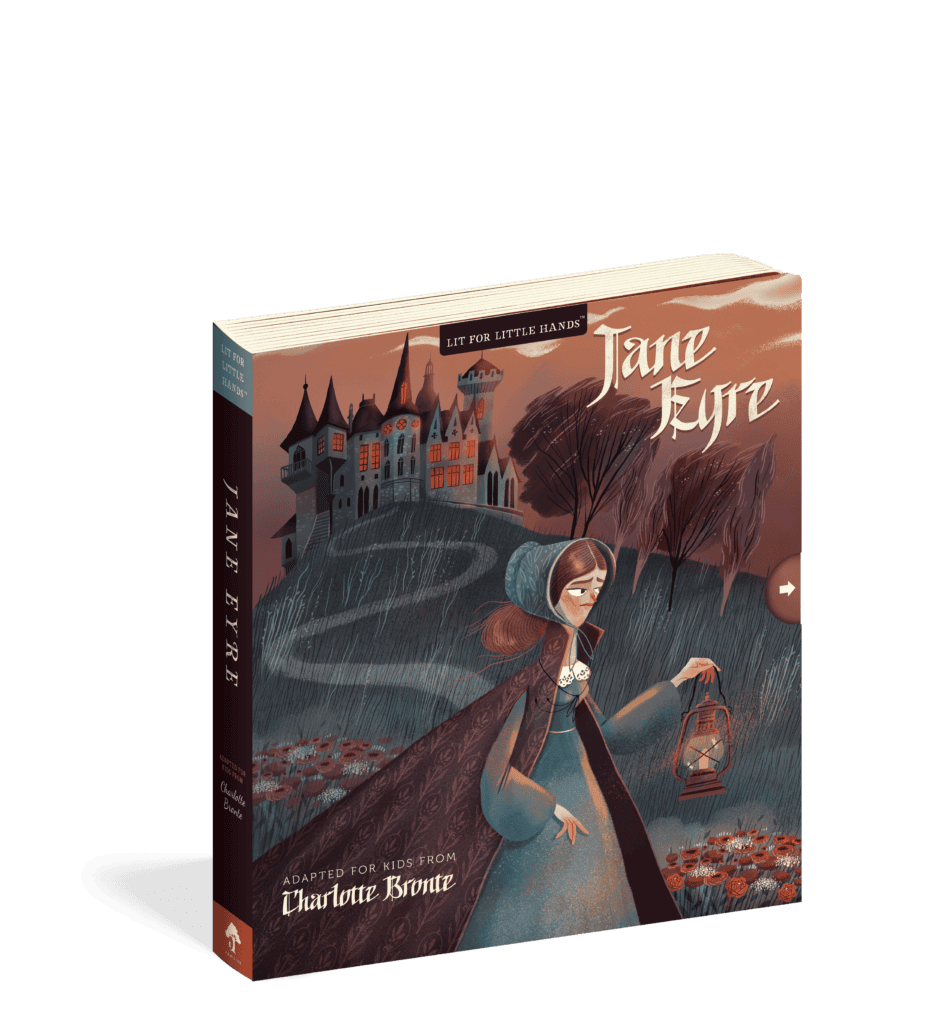
Lit for Little Hands: Jane Eyre

The Little i Who Lost His Dot

Finding Family
Shaelyn Topolovec earned a BA in Editing and Publishing from BYU, worked on several online publications, and joined the Familius family. Shae is currently an editor and copywriter who lives in California’s Central Valley.