

Stock up on these 67 essential foods from Cooking Through Cancer to nourish your body and support recovery during cancer treatment.
When navigating cancer treatment, having the right foods on hand can make all the difference in managing symptoms and supporting recovery. This article is an excerpt from Cooking Through Cancer: 50 Easy and Delicious Recipes for Treatment and Recovery by the Cancer Fighting Chef Richard Lombardi, a cookbook packed with nutrient-rich recipes, practical tips, and contributions from celebrities like Jay Leno and Mark DeCarlo. With 67 essential foods to keep in your pantry, fridge, or freezer, you’ll be better prepared to nourish your body during treatment and recovery. (And find three free cancer-fighting recipes at the end to get you started!)
Getting Started
I created the Cancer-Fighting Chef website. The site contains blogs about cancer-fighting foods and recipes using cancer-fighting ingredients.
I decided to write this book to reach out to more people. It contains all-new cancer-fighting recipes and additional information to help make cancer-fighting cooking a breeze.
If you have read other books about cancer-fighting foods, you will notice a few differences in Cooking Through Cancer. If you want to find extensive detail about cancer-fighting foods, the information is already out there. It’s in books, in various publications, and on the internet. You won’t find it here. Many good, dedicated people are willing to give time and energy to impart knowledge to cancer patients. Anything you want to know is just a few clicks away, so I didn’t see a need to fill this book with that stuff. This book presents only what I consider to be important for preparing quick, easy, and delicious meals that will be helpful in fighting cancer—very detailed recipes, as many cooking tips as I can remember, and enough information about my cancer battle to support you in your battle.
The book has recipes for everyone, including recipes for patients going through treatment or recovering after treatment. There are sections for cooking tips, a list of kitchen utensils, and a list of ingredients that you will use often enough that you’ll want to keep a supply on hand. I even have a section of kids’ favorite foods made The Cancer-Fighting Cook way. You can give the kids what they like to eat but remove the junk food ingredients.
If you can’t find what you need in the book,
Please visit thecancerfightingchef.org for more information. It has information for cancer patients, cancer survivors, and cancer caregivers. I will be updating it daily with helpful information. If you can’t find what you need there, you can email me, and I’ll respond as quickly as I can with what you want to know. I would also like to introduce you to the website cancerfightingchefsinternational.org. It is a site for chefs and restaurant professionals who wish to learn about cancer-fighting foods. They can create new menu items for their restaurants that contain cancer-fighting ingredients.
On the website, we make every effort to feature any restaurant, anywhere in the world, that serves cancer-fighting foods on their menu. With the assistance of Cancer Fighting Chefs International, you can now see where cancer-fighting foods are available in restaurants worldwide. Please look in restaurants and markets around the world for items with the “Approved by The Cancer Fighting Chef” seal of approval to be sure you are fighting cancer with each bite.
I hope you will enjoy reading this book and preparing all the recipes in it. Before you begin using it, though, you should be guided by the beliefs that we are our own best caregivers, that we must learn to listen to our bodies, and that we can’t be afraid to let our families and our doctors know what our bodies need.
Food to Keep on Hand
I’m sure you’ve heard the old adage “fail to plan, plan to fail.” It is as true in the kitchen as it is anywhere else. Starting a project without planning is a waste of time and energy. In the kitchen, having all the equipment you will need and having the ingredients measured out and ready for use is no guarantee for success, but not having them is guaranteed failure.
Shopping is a necessary and important part of preparation. Life will be so much easier if you don’t have to shop for every ingredient every time you cook. You need to keep routinely used items on hand—in the refrigerator, freezer, pantry, or cupboard. Your next question may be “What constitutes a routinely used item?” I believe the most important supplies to keep on hand are those that are not perishable and are used in small amounts for each recipe.
A List of Some of These Items Might Be:
- salt
- kosher salt
- sea salt
- black pepper
- white pepper
- crushed red pepper
- cayenne pepper
- granulated garlic
- dry oregano
- dry parsley
- sugar
- powdered sugar
- brown sugar
- cinnamon powder
- extra virgin olive oil (EVOO)
- corn oil
- vegetable oil spray
- olive oil spray
- reduced-fat mayonnaise
- red wine vinegar
- balsamic vinegar
- white vinegar
- taco seasoning
- bread crumbs (Italian style)
- bread crumbs (panko style)
- dry mustard
- poppy seeds
- Tabasco sauce
- lemon juice
- capers
- butter
- margarine
- sweet marsala wine
- flour
- Wondra flour
- grated Romano cheese
Along with the above list are dry pantry items that might be completely used up for a recipe. I suggest this list, but you may have additional ones that you especially like.
Assorted Pasta Shapes, Both Long and Short (Remember to Use Whole-Grain Pastas)
- spaghetti
- linguini
- fettuccine
- angel hair
- penne
- rigatoni
- salad macaroni
- small shells
- bowties
Assorted Canned Beans and Vegetables
- great northern beans
- pinto beans
- garbanzo beans
- lima beans
- kidney beans
- lentils
- tomato sauce
- whole tomatoes
- crushed tomatoes
- stewed tomatoes
- peanut butter
Other Items to Keep in the Pantry
- walnuts
- honey
- low-fat, low-sodium chicken broth
- vegetable broth
The Freezer
Your freezer should contain a good supply of both meat and vegetables. Most can keep for up to six months, and defrosting is easy. Defrost in the refrigerator or under running water. Never just leave it out on a counter to defrost.
Your refrigerator can also hold some items, but remember many of these items will perish in a few days. Potatoes, carrots, onions, mozzarella cheese, and leftover marinara sauce will keep for a week or longer, but don’t overbuy lettuce, asparagus, broccoli, etc. You can get these items a couple of days before use, but if kept too long, they will not be good.
Items for the Freezer
- boneless, skinless chicken breasts
- chicken parts
- shrimp, raw, headless, and cleaned
- pork tenderloin
- salmon, serving-size pieces
- ground turkey
- fish fillets, individually wrapped
Your Eating Plan
The recipes in this cookbook are separated into two significant categories: During: Treatment, and Recovery. They are separated by category to assist the reader in choosing a recipe according to where they are in their battle with cancer.
During Treatment Recipes
During-treatment recipes should be part of your diet during cancer treatment. Whether you are a patient or a caregiver, creating a plan will be the most important step for eventual success in following an eating regimen that will work. This book is filled with simple and delicious recipes, which is exactly what you’re going to need while in treatment.
Your plan should begin with stocking up on healthful foods. Ingredients that require little or no cooking are best at this time. Nuts, yogurt, and vegetables already cut up are a good place to start.
There will be good days and bad days. You will have days when you will feel hungry and days when you don’t want to eat. You must keep your body strong during your treatment. This is a good time to eat lots of protein. Lean meat, chicken, fi sh, eggs, beans, seeds, cheese, and yogurt are easy options. Two to three cups of fruit and vegetables should be included in your daily intake. Drink plenty of water.
Be smart. Stay away from greasy or spicy foods. Have some dry crackers on hand and eat some a few times a day. I had some swallowing problems during radiation and ate soft foods only during that time.
Recovery Recipes
Recovery recipes are good to use during the healing process. If your cancer is gone, it is time to focus on eating a balanced diet consistent with whatever the “new normal” of your everyday life requires. My “new normal” consisted of limited feeling in my legs, feet, and fingers due to the neuropathy caused by one of the chemotherapy drugs. Another drug had severely damaged my heart and lungs, causing me to need to take numerous meds and work to recover my heart and lung function.
There are some foods that boost your risk for cancer. You should always avoid these, but having cancer once means you are at risk to get it again. Those foods to avoid are:
- red meat
- processed meat
- alcohol
- sugar-sweetened drinks
You should also avoid high-temperature grilling and frying.
3 Recipes to Kickstart Your Cancer-Fighting Journey
Skip to PDF contentDiscover More Tips and Recipes to Help You During and After Cancer Treatment
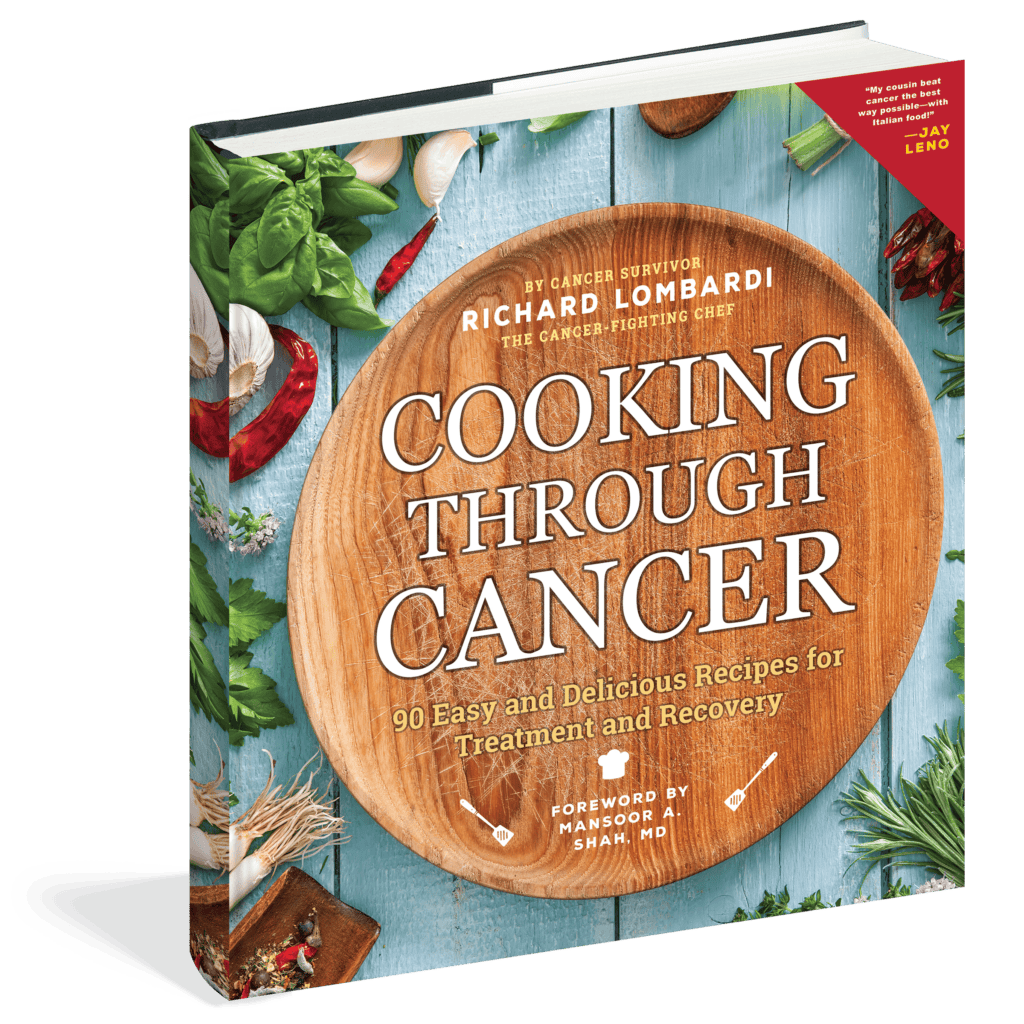
Cooking Through Cancer
Excerpt from Cooking Through Cancer by Richard Lombardi.