

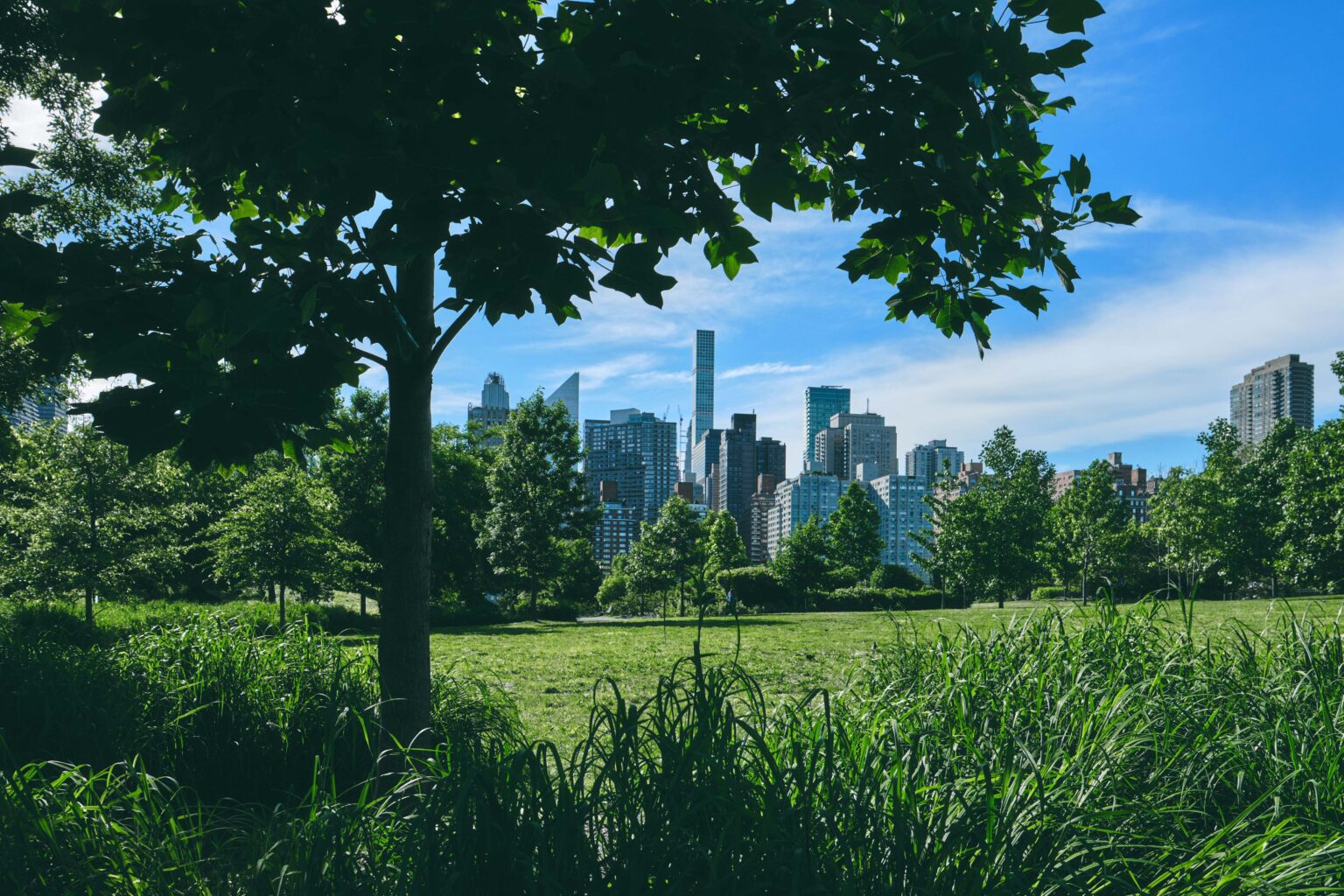
Discover the healing power of nature through five poems found exclusively in Aaron Poochigian’s book Four Walks in Central Park.
In the middle of a relentless urban landscape, it is easy to lose touch with the rhythms that keep us grounded. When the noise of daily life becomes overwhelming, turning to the healing power of nature offers a profound way to restore our mental clarity and emotional balance. You don’t have to travel deep into the wilderness to find this sanctuary; sometimes, it is waiting just around a familiar city corner. In this exclusive excerpt from poet Aaron Poochigian’s Four Walks in Central Park, we step into “Walk Four: For the Disillusioned.” Starting at Central Park West and 106th Street, this journey invites you to slow down, breathe, and experience how a simple stroll through the trees can mend a weary spirit.
5 Poems for the Disillusioned
Start: Central Park West and 106th Street
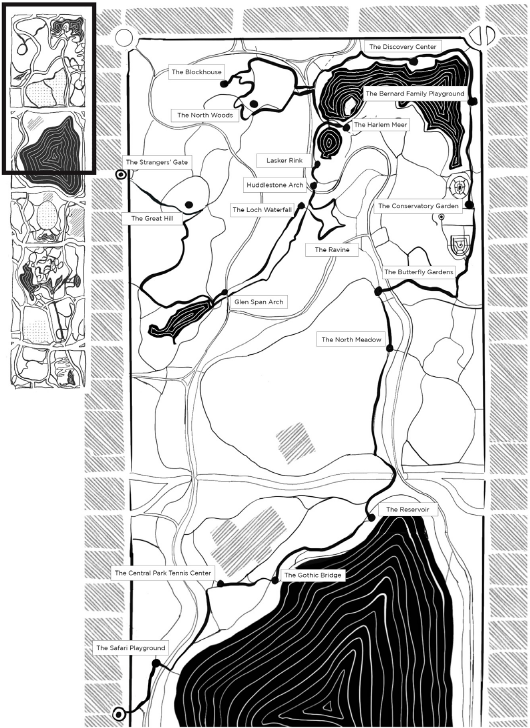
1. The Strangers’ Gate
We’ve seen so much; we need to see the rest.
I know: three days of gallivanting through
the park with me have asked a lot of you,
but think of all that’s out there. Time to rally.
Cascades and wilds await.
Before us stands
the Strangers’ Gate, which faces, to the west,
what realtors have dubbed “Manhattan Valley.”
East of it stone stairs step up to our quest.
Do you like traveling to foreign lands?
You know how, when you first arrive abroad
and see a town you’ve never seen before,
everything fascinates: a church façade,
a tent bazaar, even a sketchy alley?
All of our senses, presto, notice more.
That’s how I hope you’ll gaze upon the various
attractions we’ll be visiting today.
We keep best what we see the stranger’s way.
2. The Children’s Glade
The staircase tops out, and a gentler grade
uplifts the green stage of the Children’s Glade.
Its current denizens include gregarious
geese, two birders and a wet-grass breeze.
But actors come some days, then families
convene, lean back on stone and watch a play
in which a pipsqueak, say, takes down a giant.
Once here I saw a lakelike dance recital
spawn true human swans—no pantomime.
But what I like the most is story time.
The ones that we remember teach how vital
immersion is and, if a mind stays pliant,
wonder can be worked on every tale.
3. The Great Hill
We push on east through elms some yards off-trail,
then crest the Great Hill. Swiveling, we stare,
through gaps in the surrounding foliage,
south, east and north at Central Park expanding
in greens or blues and at the West Side where
thick-grown apartments, an expensive hedge,
conceal the Hudson and the Palisades.
But no more brick and steel. We’re here for shades
of viridescence.
A sustained break standing
amid the jade, and we are off again.
The trees grow closer, and the breezes cool.
Hawthorn and ash are reaching toward us, then,
behind a Herculean sycamore,
we face the pipe-fed lake they call the Pool—
a green lagoon, a sluice, a tarn. We turn
and mosey east along the root-wreathed shore.
Hearing, ahead, the permanent applause
of water as its drops, we soon discern
a tiered cascade.
4. Glen Span Arch
A jag downhill between
forsythia and hickory, and we pause
to take in Glen Span Arch. Beneath it run
both the main path that wanders the Ravine
and the endearing brook they call the Loch,
which burbles from the Pool toward Harlem Meer.
Quarried from Fordham gneiss, a local rock,
the bridge’s rough-hewn ranks of stone appear
as natural as all else in the scene.
The vault transports us to a Roman bath
whose vines are timeless.
5. The Ravine
Once inside the canyon,
we trend northeast along a sunless path
and cross a raw, anonymous stump bridge.
The Loch has faded to a hushed companion
but still consoles, with devious good cheer,
Manhattan’s bleakest wilderness frontier.
So many trees. The whole northwestern ridge
is densely trunked and shaded: river birch
and willow, black, red, white and swamp white oak.
They’d rather be alone. When deep in here,
I catch the vast, like, panoramic fear
of wilderness oblivion. No joke.
The sun goes out. Then, after rangers search
weeks for us during sudden Arctic weather,
do we get found? Do we rub sticks together
to win back warmth and signal them with smoke?
Still worse, the light and lornness here evoke
a desperate Dante. Hiking up a slope
as vastly overgrown as that, he found
wild beasts so mean he wound up giving ground,
panicking and abandoning all hope
he could do anything but detour, enter
Hell and confront the Devil at the center.
He went so far to come back from the dead.
We’ve got it good. I mean, who could despair
beside a cute stream with a bridge ahead?
Dive into Nature and Mental Rejuvenation with the Book
Four Walks in Central Park
Excerpt from Four Walks in Central Park by Aaron Poochigian.