

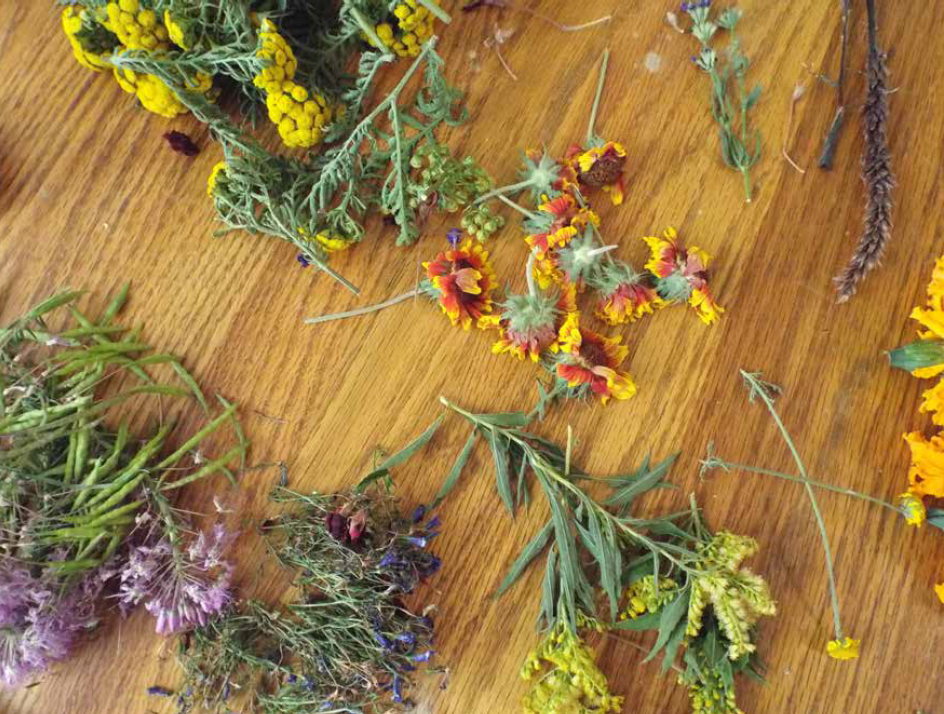
Learn how to make natural plant dyes from cabbage, cherries, Mexican honeysuckle, roses, and turmeric with easy, chemical-free recipes.
Why buy store-bought paints when nature already offers a rainbow at your fingertips? From the deep purples of cabbage and the rosy blush of cherries to the golden hues of turmeric and the soft pinks of roses, every plant hides its own secret pigment waiting to be revealed. In this excerpt from 1000 Botanical Colors, self-sufficiency expert and master gardener Caleb Warnock shows you how to turn five common plants—cabbage, cherries, Mexican honeysuckle, roses, and turmeric—into natural, chemical-free dyes, paints, and inks. Each simple recipe connects you more deeply to the world around you while bringing a splash of nature’s own color into your art, home, and creative projects.
Introduction
Welcome to a world of forgotten botanical colors. Learn to make 100% natural pigments from scratch, just as it’s been done for thousands of years. You’ll use petals, roots, bark, stems, fruit, leaves, mushrooms and more to make colors like you’ve never seen before. We start with simple hot and cold dye techniques, then convert dyes into pigments and paints, stains and inks. Every color is possible from easy yellows, browns, reds, pinks, and purples, to less common oranges, and blacks, to the rarest colors—blues and whites.
You can use your homemade colors to dye wool, silk, cotton, and linen, to make powder or glaze pigments for storage, and to make watercolor, gouache, tempera, oils, stains and inks, for use on paper, fiber, canvas, wood, metal, glass, stone and more.
Relax while you join me in using petals to make paint, leaves to make prints, bark and nut hulls to make wood stains. We will use blooms to make colorful air dry clay, and weeds to make kiln paint for pottery. We’ll return to nature by turning trees into ink, cactus into pigment, aloes into dye, and berries into art.
To create this book, I spent five years making every single paint, pigment and dye sample on these pages, by hand and from scratch, using only natural ingredients. Every recipe has been tested and tested again. As with all my books, I wanted to write this text because there is a huge need for a true dictionary of botanical colors, with lots of pictures. In this book, at last we have a single convenient source to find out which plant, mixed with which mordant, in which recipe, makes which color, and how those colors vary on paper, canvas, fabric, soap, clay, cloth, and more.
1. Cabbage
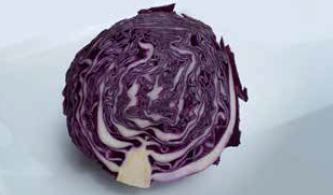
Colors Created: blue, pink, red, green, purple, turquoise
Parts Used for Pigment: leaves of purple cabbage
Plant Type: biennial
Hardiness Zone: 1
Seeding: Plant directly outside in spring or start indoors, seeds available at SeedRenaissance.com.
- Simmer for 10 minutes to make pigment or dye. Strain.
- Simmer again to reduce liquid to desired color strength. Purple cabbage responds well to mordants.
Notes: Paint will smell like cabbage, but the smell goes away totally when dried. Makes extraordinary colors that are fun to paint with.


2. Cherries
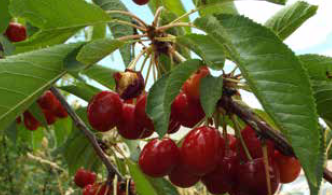
Colors Created: purple with citric acid, blue with vinegar or alum, blue-gray with baking soda, purple when unmordanted or with iron or ammonia; rich reds with all mordants from bark and twigs
Parts Used for Pigment: ripe berries, leaves, bark, twigs
Plant Type: tree
Hardiness Zone: 5
- Mash berries and simmer for 10 minutes to create pigment or dye. Bark or pieces of branches or twigs are simmered for an hour. Cherry leaves simmered for 75 minutes create parchment and brown with baking soda. Leaves of the purple sand cherry bush, which is widely grown as a landscape bush for its beautiful foliage, are perhaps an unsung hero for their stunning colors of dye and pigment, used fresh or simmered for 10 minutes.
Notes: Alum and tartar mixed make a turquoise blue. Cherry leaves make excellent eco-prints. Purple sand cherry leaves make astonishing purple eco-prints unmordanted, or excellent green eco-prints when mordanted with vinegar of copper—the lines and veins are crisp.


3. Mexican Honeysuckle
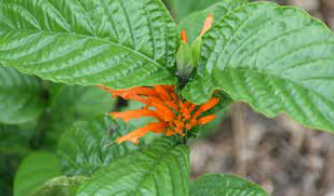
Colors Created: blue, green
Parts Used for Pigment: stems, leaves
Plant Type: tropical tender annual
Hardiness Zone: 8
- Mexican honeysuckle, or muicle, has long been used as tea and botanical food coloring, and dried loose tea of the leaves and stems is sold online. The color changes easily. If you soak the leaves and stems in water, the water slowly turns pink and then red. When simmered, the water can also be slow to change color, but after a few minutes turns pink and then red and then purple after boiling for a while. Boiling the water for 15 minutes produced a pale pink that dried violet.
- The same liquid, reduced, created blue with black edges. Vinegar created a turquoise blue-green. Alum made a mauve-pink. Baking soda or ammonia made a smoky green. Iron seemed to destroy the color. Hydrated lime made a beautiful old-fashioned green with gray undertones. A second boil for 5 minutes created a pale blue.
- I experimented a lot with this plant. Boiling the leaves and stems for 1 hour created a red liquid that dried blue, but vinegar, alum, baking soda, ammonia, or hydrated lime made true black. If the black was not applied thinly, it was sticky and tar-like for several days. There is a hint of green undertones to the black, especially with ammonia.
- Using about 2 teaspoons of dried loose leaves and stems per cup of water made pale blue when simmered for 10 minutes. The color was red when applied but dried blue. I reduced this liquid in the microwave for 30 to 90 seconds at a time and gradually, as the liquid thickened, the color when dry turned from blue to blue-green to green.
- A third boil created lavender. Another boil, following the same pattern, made a gray-green that gradually darkened to forest green without the hints of blue.
Notes: The color seems to be fickle, depending on how much color is in the leaves and stems, and is highly changeable spending on volume, temperature, and mordants. This is a fun plant to play with.


4. Roses
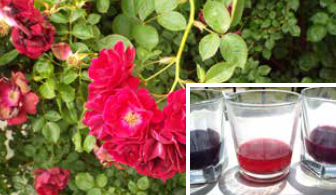
Colors Created: red, pink, peach, yellow, green, brown, black (varies by petal color)
Parts Used for Pigment: petals
Plant Type: perennial
Hardiness Zone: varies
- Simmer for 10 minutes to make pigment or dye. Strain.
- Simmer again to reduce liquid to desired color strength.
Notes: Most plant material does not have to be stirred while it is boiling, but roses do. Roses lose their color by blanching wherever they are in direct contact with the boiling water, and the petals float, so stirring every couple of minutes makes sure you get all the color out of the petals. Combine with citric acid to get the best red colors. Rose leaves make excellent eco-prints.


5. Turmeric
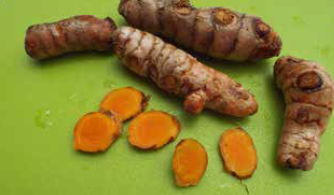
Colors Created: red, yellow, orange
Parts Used for Pigment: root (fresh, dried, or powdered from the grocery store)
Plant Type: perennial
Hardiness Zone: 8
- Simmer again to reduce liquid to desired color strength.
- Simmer for 30 minutes to make pigment or dye. Strain.
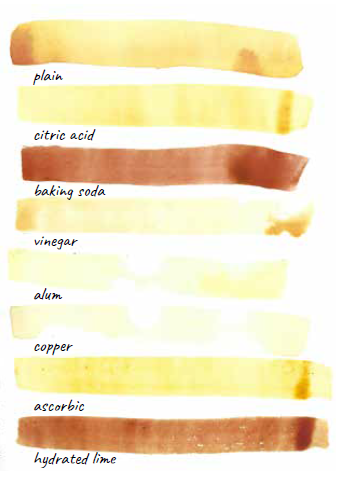
Discover More Botanical Colors and How to Use Them
1000 Botanical Colors
Excerpt from 1000 Botanical Colors by Caleb Warnock.