

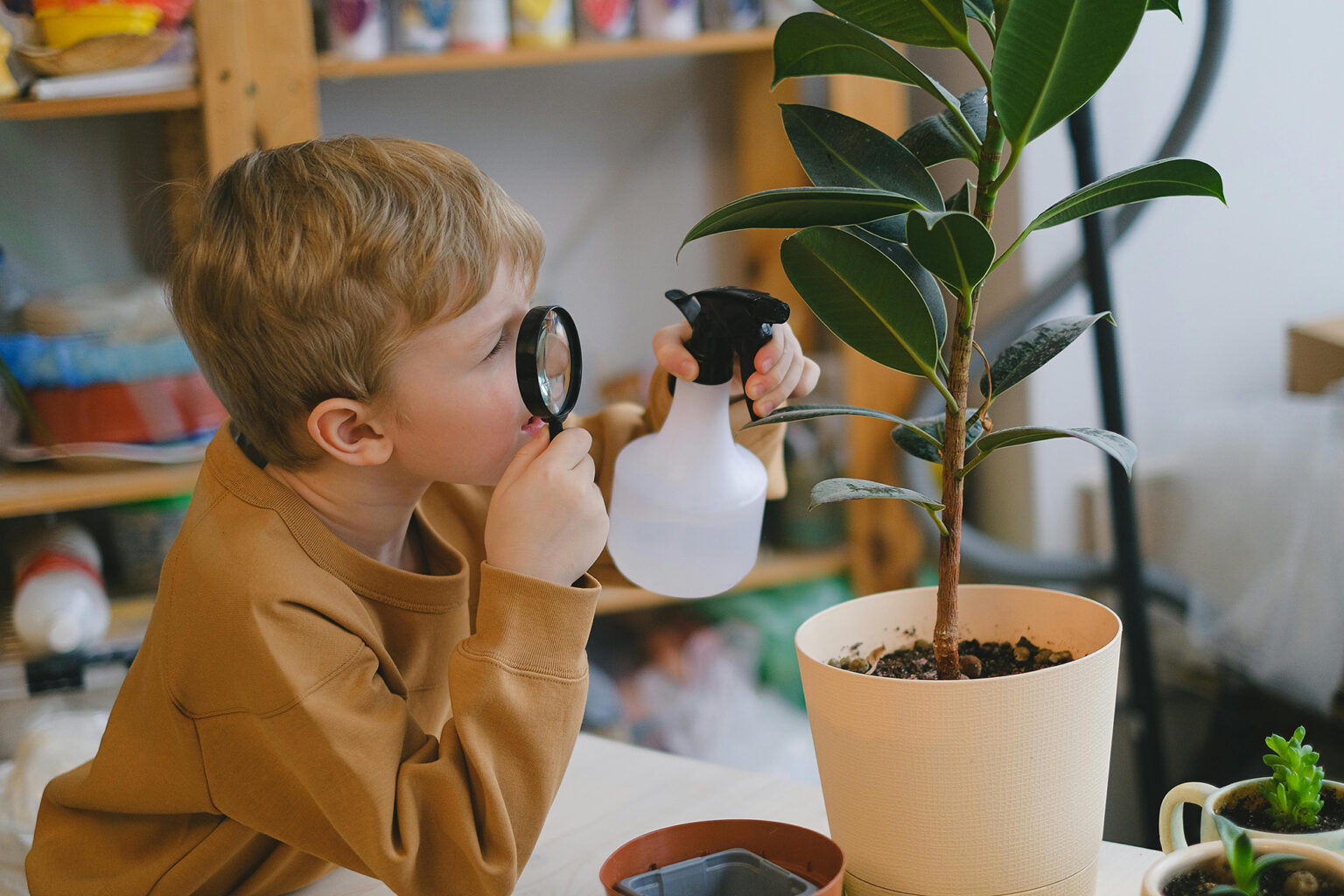
Curiosity isn’t just asking endless questions—it’s a fun way to connect with your kids and develop critical thinking skills. Here’s how!
Eleanor Roosevelt wisely said, “I think, at a child’s birth, if a mother could ask a fairy godmother to endow it with the most useful gift, that gift should be curiosity.”
One of the many beautiful attributes of young children is their curiosity, but research shows that as children get older, society trains them to ask fewer questions. Despite that, there are ways for families to connect through curiosity, fostering this powerful gift year after year.
The Evolution of Curiosity
As a mother, I’m quite familiar with the seemingly endless curiosity of preschoolers. I wrote Why, Daddy? Why? in 2019 in response to the bombardment of questions from my then four-year-old. With four children aged a few months to seven years, incessant questions were not my friend.
Yet, my daughter asked the questions so innocently and adorably—with the word “why” at both the beginning and the end of the inquiries. As I continued over the next few years writing other books in the Curious Cubs series—with the second book, Why, Mommy? Why?, releasing in March—I considered the beauty of questions and how they connect families more deeply.
I learned that nobody asks more questions than a four-year-old. I learned that while preschoolers might ask many, many questions, by the time those same children grow to be middle schoolers, they stop asking frequent questions. And by the time they enter my college classroom, they seemingly have forgotten how to ask good questions.
What an unfortunate transition!
Good Questions Are Better Than Good Answers
My personal exploration with research surrounding questions and their importance taught me the extreme value in patiently receiving the many questions my children raise. More than that, I learned to validate good questions—that answers are wonderful, but sometimes simply asking a thoughtful question is even more valuable than knowing the answer.
As a mother, I paid more attention to the questions my children asked. When they told me stories or shared what they were learning in school, I stopped what I was doing and asked them questions.
When they asked good questions, I praised that: “What a great question! Let’s talk about that.”
Fostering this connection through curiosity validates the concepts and ideas our children value. When we respond to their questions as thoughtfully, calmly, and fully as we can, we encourage them to continue asking questions, which serves them as learners and strengthens our relationships.
Here are some tips for your busy families to connect through curiosity in the spirit of Familius’s Habits of Happy Families.
First of All…Why?
It wouldn’t be a piece of writing of mine if we didn’t ask, “Why?” Why should we care about raising curious kids?
Kids and parents are overscheduled. We are distracted by screens, sometimes even in face-to-face conversations. Fostering curiosity can sometimes mean the use of technology, but often it does not. Limiting technology or outright avoiding it for some moments and family experiences can lead to being more present in your relationships, which makes for a more connected family.
Academically, developing critical thinking skills couldn’t be more timely and valuable; we need critical thinkers in our private and government organizations. And curiosity is how we can do it. By teaching kids how to find their own answers, we’re teaching them to analyze difficult problems, value different perspectives, and find innovative solutions.
Finally, when parents are interested in questions, they signal to their children the importance of lifelong learning, which carries endless value to our families and our communities!
If that is not persuasive enough, asking questions can simply be fun. Here’s how.
Ways to Connect through Curiosity
1. Develop a question-asking ritual
Start a “Question of the Day” tradition in your family. Maybe this is in the car while you’re all driving to activities. Or at the dinner table. Or even at bedtime. Your family can brainstorm their own questions and store them in a question jar or online in a shared document. Then when the time comes, choose a question for everyone to answer.
The questions could be fun: If you had to adopt a wild animal as a pet, what would you choose and why? If you could create a new holiday, what would it be?
The questions can focus on scientific themes if your family loves science, or literature if you’re readers. You could fantasize about the perfect family vacation if you’re travelers. Make the questions yours.
2. Create adventure around questions
When your children ask questions—which they inevitably will—rather than delivering the answer, explore the research together. Look up the answer, or plan an excursion to a local museum or library to learn the answer.
Questions can lead to wonderful family experiences in this way if you take the time to let them. And if time is scarce when the questions come up, don’t be ashamed to say that you’ll have to table that one for the next adventure.
3. Unplug and explore
On the flip side, what if you didn’t look up the answer to a question? What if instead you theorized possible answers or solutions? What if you developed your own science experiments?
Or what if you simply unplugged altogether? Without the influence or disruption of electronics, what questions could you and your family brainstorm and then explore? How might you communicate to your children that although it may be simple to look up an answer, there is value in struggling through a concept or thinking broadly about possible solutions before being told one by someone else?
4. Reusing materials to fuel curiosity
When I was in school, teachers advised us to recycle. Now, my children also look at reusing materials. As you unplug from the internet, collect items from around the house that you can reuse. Then challenge your family members to develop blueprints for an item they’d like to make. You can set parameters or a specific purpose the item must serve, or let your kids run wild and free with it.
What will they create? How will they employ their creations? How can you as a family celebrate this curiosity?
Curiosity Isn’t Just for Kids
The reality of our busy everyday lives is that fostering curiosity can be a challenge, but there are so many benefits for your children’s connections to each other, memories, and critical thinking skills.
And curiosity is not only for children! As lifelong learners, we parents should foster curiosity as well. By doing so, we show our children that it’s never too late to ask good questions.
Discover More Ways to Raise Curious Cubs
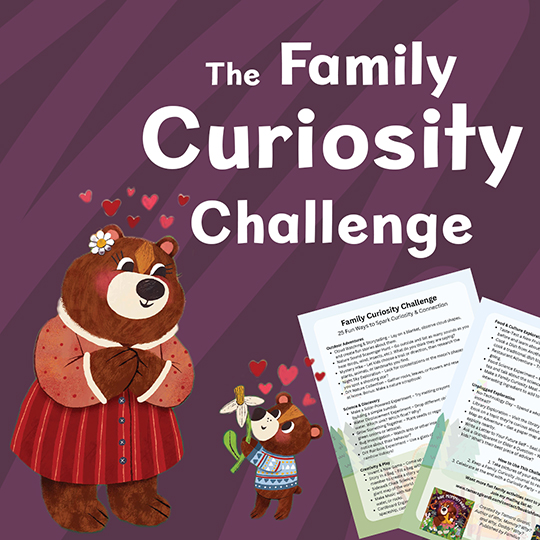
The Family Curiosity Challenge
Create a rainbow and invent a new game with 25 activities in the Family Curiosity Challenge, free when you sign up for author Tamara Girardi’s newsletter.

Why, Daddy? Why?
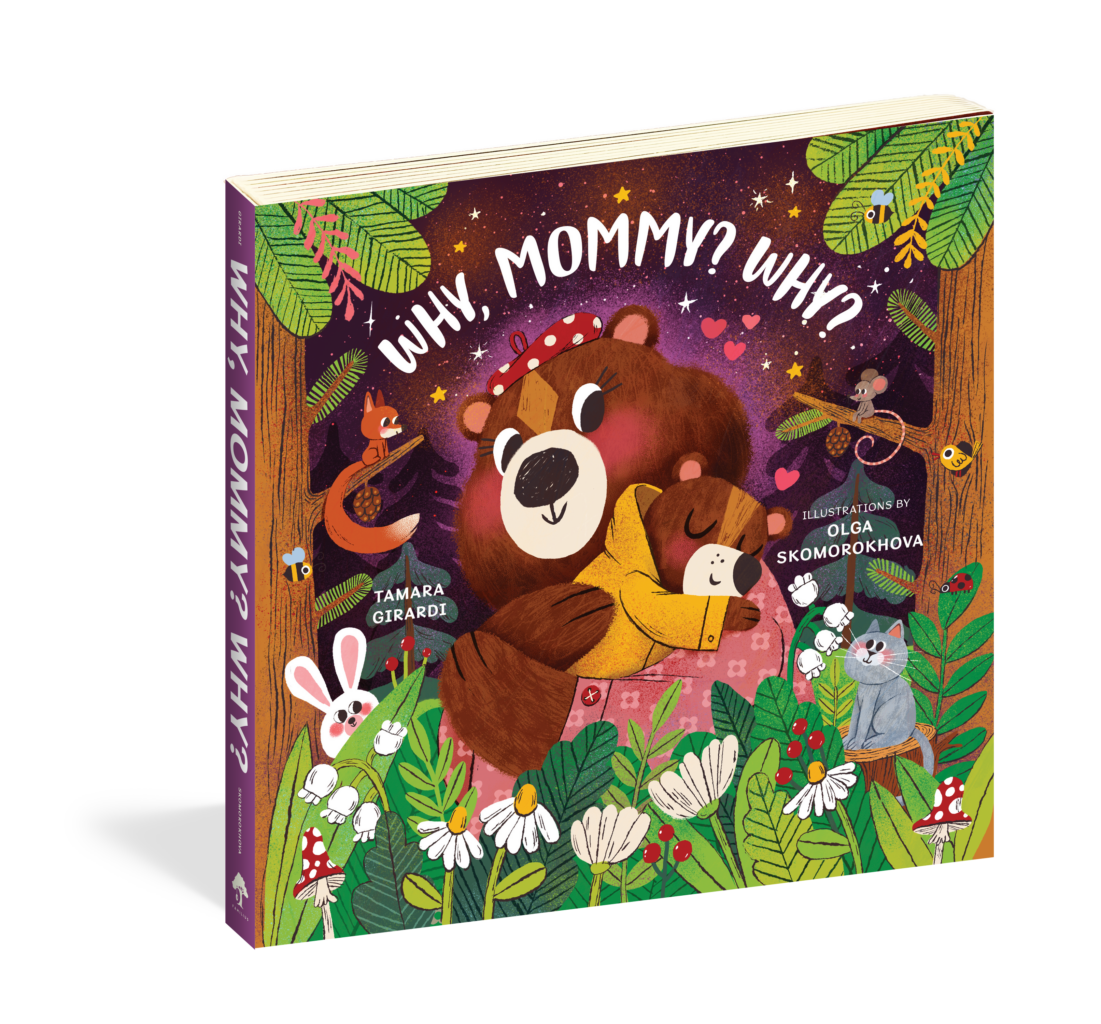
Why, Mommy? Why?
Award-winning author Dr. Tamara Girardi writes books for children and teens. Her published titles include the Amazon Editor’s Pick Why, Daddy? Why? and its newly released companion, Why, Mommy? Why? Two more titles, Why, Grandma? Why? and Why, Grandpa? Why? will follow in the Curious Cubs series on Grandparents Day 2027. Tamara has published six YA titles in the Iron Valley and Carnivalesque book series with Wise Wolf Books. Also an academic, Tamara is a college English professor. She lives in a suburb of Pittsburgh, Pennsylvania, with her husband, four adorably rambunctious children, and an even wilder German shepherd.