


Negative scripts can break up couples. Shift your mindset, challenge harmful beliefs, and build a stronger, healthier relationship.
What if the biggest threats to your relationship weren’t the obvious red flags but the quiet, negative scripts running in the background? In The Joy of Imperfect Love, Dr. Carla Marie Manly explores 19 of the most common negative beliefs that slowly break up couples—from the idea that an imperfect relationship is a bad relationship to the myth that love shouldn’t take work. Each script is paired with the unhealthy mindset that fuels relationship struggles and the healthy perspective that can bring couples closer. By challenging these harmful beliefs, you can build a stronger, more resilient love.
Imperfect Love Cabochon #6—OPENNESS AND OBJECTIVITY SUPPORT IMPERFECT LOVE
When we embrace the mindsets of openness and objectivity, our internal and external worlds open up. As we discover how to step back from our own go-to perspectives, we become aware of the scripts and often blind or closed mindsets that invade our lives—and divide us from ourselves and each other. The mindset of openness—a willingness to explore new perspectives and arenas—allows for curiosity and gifts that newfound wisdom brings. A mindset of objectivity—being able to free yourself from preconceived beliefs—creates freedom from the natural limitations of personal bias. In the liberating atmosphere of openness and objectivity, your relationships have the freedom and space they need to change and grow.
Common Negative Scripts that Work Against You
Let’s look at common negative scripts and explore why these scripts are problematic. First, you’ll note that each negative script we explore is highlighted by descriptions of possible negative internal dialogues followed by an explanation of the script. Each explanation is then followed by two examples. The first example reflects the unhealthy mindset that underlies the negative script. The second example reveals the healthy mindset that supports connective scripts and the growth of imperfect love. Each of these second examples illuminates the power of a healthy, emotionally intelligent mindset.
You will notice that many of the scripts apply to all relationships, although some are more oriented toward romantic relationships. For simplicity’s sake, the word “partner” is used most often; however, the examples often remain relevant if “friend” or “family member” is substituted.
You will also note that each script description highlights common case study themes in place of the case studies provided in many other chapters. As you read, remember that the goal is simply to notice any scripts that are at work in your life with an open and objective mindset. Strive to be compassionate and nonjudgmental; this will help you foster imperfect love. We are all imperfect, and we all have scripts at work in our lives whether we are aware of them or not. The more you become aware of your scripts and blind spots, the less they will control you.
1. AN IMPERFECT RELATIONSHIP IS A BAD RELATIONSHIP
Unhealthy Mindset
My partner and I have constant issues. Things should be perfect, easy, and fluid. If my partner would just do things my way, life would be so much simpler. I have too much going on in my life; I can’t handle a relationship that’s not perfect. There’s someone better out there for me anyway.
Healthy Mindset
My partner and I seem to be facing the same issues over and over again. I know I like to be right and have everything go my way, but that’s not realistic in a relationship where there are two people. I tend to expect perfection, but I will strive to let go of my “perfect or nothing” mindset so my relationship becomes more harmonious and authentic.
2. IT’S BEST TO LOOK THE OTHER WAY
Unhealthy Mindset
How my partner behaves is not my business! My partner can lie, cheat, or steal—as long as it doesn’t impact me negatively, that’s fine. It takes too much energy to call out my partner; I’ll just ignore the disrespectful and inconsiderate behavior. So what if my partner doesn’t have a good moral compass? I don’t respect my partner, so I just look the other way.
Healthy Mindset
My partner and I are a team. How we treat each other, our relationship, and others is important. In fact, how we think and act as individuals certainly affects how we are as a team. When my partner and I are doing our best to act in ways that are congruent with our value systems and moral codes, we feel so much better about ourselves, each other, and our relationship. We are both imperfect, so when one of us slips up, it’s important to respectfully focus on the endgame, which is being our best selves and excellent partners.
3. A GOOD RELATIONSHIP SHOULDN’T TAKE ANY EFFORT OR WORK
Unhealthy Mindset
I give so much of myself to work; I just want to relax when I get home. I shouldn’t have to engage with my partner if I don’t want to. I certainly shouldn’t have to deal with any conflict or issues. After all, a healthy relationship should just run smoothly on its own. It doesn’t need any maintenance. Yeah, I put on a nice front when we were dating, but I shouldn’t have to put in effort now.
Healthy Mindset
I value myself, my partner, and my relationship. I put a lot of time and energy into other areas I value—like my work and hobbies—and my partner and relationship deserve at least that much effort. It’s important to continue to nurture the romantic energy and loving promises I offered my partner when we were dating. I want to invest in giving my partner and my relationship more of my commitment and devotion—not less.
4. CHANGE IS BAD
Unhealthy Mindset
My partner wants me to be more considerate, but I should just be accepted for who I am. If she really loved me, she’d be accepting of all of me. I shouldn’t have to change. The relationship is all about me. If she’d only go with the flow and let me do what I want, everything would be fine. She wants me to be the kind and compassionate type; I just don’t have that gene.
Healthy Mindset
My partner is asking me to be more considerate, and I can see that I have room to grow in this area. I want to become more thoughtful and considerate overall. I can see and feel that this would be in my best interests and would help me throughout all of my relationships. I will work on being more attentive to my partner’s needs.
5. CONTROL OR BE CONTROLLED
Unhealthy Mindset
I’ll do whatever I want and come home whenever I want! Stop being controlling! You’re not the boss of me! My way is the right way, so stop trying to control me. You think I’ll let you make decisions for me? No way, I’m the top dog!
Healthy Mindset
It makes sense that you’d like me to check in with you on things that affect you or our relationship. I see that you simply want to be respected, and you deserve to be treated with consideration and fairness. We are partners—we are on the same team—so it’s important for me to keep you in the loop. After all, I like to be considered when you do something that affects me. I’m not losing any control; in fact, I’m gaining true control by discovering the importance of mutual consideration and respect.
6. HONESTY ISN’T ESSENTIAL
Unhealthy Mindset
What I do is my business. My partner is not my boss. I am a free and independent person; I don’t need to answer to anyone. I can do anything, spend however much, or act in any way I want; what my partner doesn’t know can’t hurt her.
Healthy Mindset
I am in a committed partnership. It’s important to have honesty and transparency between us. After all, honesty breeds trust and safety, and that’s the energy I want to foster in my relationship. Sometimes it is uncomfortable to discuss things I’d rather sweep under the carpet or hide, but I know this is deceptive. And I don’t want to bring deception and dishonesty into my relationship. I may not be perfect at doing things right, but when I make a mistake or start to get off track, I want to share this with my partner. I want my partner to know all of me—and that includes my imperfections.
7. LOVE MEANS NEVER HAVING TO SAY YOU’RE SORRY
Unhealthy Mindset
I’m right and my partner is wrong. This whole apology thing is just a game. It’s all about power and control—trying to get me to apologize so I’m the underdog. Giving an apology is meaningless to me. But my partner is so irrational and touchy, I’ll just say the apologetic words to get things over and done with. It’s really my partner’s problem, so maybe I’ll ignore it altogether. I don’t care if my partner is upset and hurt.
Healthy Mindset
I value my partner—and my relationship—and can see that my partner is hurting. By slowing down to understand what has caused hurt feelings and harm, we can avoid similar dynamics in the future. When I let my partner know that I acknowledge and understand what has transpired—even if the issue wasn’t intentional on my part—we both feel more aligned and connected. It’s not about right and wrong, it’s about learning how to be more aware and respectful of each other’s needs.
8. INDEPENDENCE IS EVERYTHING
Unhealthy Mindset
I am my own person with my own future. I will do what I want when I want. Sure, we are in a relationship, but we should each have separate paths. We’ll intersect now and again, but it’s simpler when I’m solo. We’re married, but it’s important for us to live separate lives. Did you expect our marriage to be a real union?
Healthy Mindset
I am my own person—a healthy, balanced individual—within a loving, connected relationship. I am invested in creating a future with my partner that feels good to both of us. I am emotionally flexible and able to be both autonomous and deeply connected. Although I sometimes feel anxious when I am vulnerable with my partner, I know the importance of emotional connection and reciprocity. I am learning how interdependence builds trust and safety; it actually feels good—even great—to rely on someone I can trust.
9. BOUNDARIES AREN’T IMPORTANT
Unhealthy Mindset
Just do things my way. Don’t give me your opinion; it doesn’t matter. If you’d just shut up and do what I say, things would be fine. Go along with what I want or I’ll make you pay one way or another.
Healthy Mindset
Your needs are important to me; I want to respect your boundaries. Even if it’s inconvenient or takes a lot of discussion, we both deserve to have our needs and boundaries respected. It’s sometimes uncomfortable and difficult for me to factor in your perspective and rights, but we are partners and must strive to respect each other at all times. I respect you, myself, and our relationship enough to make sure that I honor your boundaries.
10. A LITTLE FLIRTING IS NO BIG DEAL
Unhealthy Mindset
I can look at whoever I want and in whatever way I want. The way I look at other people sexually is none of my partner’s business. It doesn’t matter if I flirt a little with people at work or send cute little texts; it’s all harmless and just part of the attention-getting fun of being me. I can’t help that other people stare at me with a sexual overtone. And I have every right to stare back—after all, it’s just a stare.
Healthy Mindset
I’m in a committed relationship, and I want to treat my partner with consideration and respect—the same way I want my partner to treat me. I don’t choose to put my energy into flirting with other people; I’ll use that energy to lovingly connect with my partner instead.
11. WHAT’S IN MY PAST DOESN’T AFFECT ME OR US AND TIME HEALS ALL WOUNDS
Unhealthy Mindset
Sure, I’ve had a series of toxic, disposable relationships, but I’m just going to carry on with my life. My alcoholic father terrorized us, but that’s in the past; it didn’t affect me. Besides, he had a funny, upbeat side that people liked, so it wasn’t all that bad. There’s no way that my history affects my relationship with my current partner; I’m not going to waste any energy addressing my issues. What’s in the past is in the past.
Healthy Mindset
I realize that I, like many people, have suffered from trauma in my past. I never felt safe as a child, and I unconsciously carried dysfunctional patterns into adulthood. This has affected my ability to be in a loving relationship that offers safety and intimate connection for both me and my partner. I want to work on myself so I can heal my old wounds. Working on myself will help us have the healthiest relationship possible. I will continue to strive to have the courage to bring trusting vulnerability into my relationship.
12. DOUBLE STANDARDS ARE ACCEPTABLE
Unhealthy Mindset
I love that my partner puts so much energy into our relationship, but I don’t have to do anything in return—saying “I love you” now and again is good enough. I want my partner to be clean, respectful, and conscientious, but I get to do whatever I want! I don’t care about my partner’s feelings, but I want my partner to be considerate of mine. My partner needs to be honest with me, but I get to be as deceitful and manipulative as I want—I just need to make sure I don’t get caught!
Healthy Mindset
It’s important to have mutual standards for behavior that my partner and I can count on. When we show up for each other by honoring our intentional agreements, we both feel respected, appreciated, and safe. My partner and I strive to live up to the standards we’ve set; this gives us a foundation of trust and mutual respect that’s absolutely essential.
13. HEALTHY COMMUNICATION ISN’T CRITICAL
Unhealthy Mindset
If I could just get my partner to shut up, everything would be so much better. There’s no use talking about our issues because nothing ever gets better. Besides, talking just makes things worse because my partner doesn’t want to see things my way. Honestly, I just don’t see why there’s such a need to discuss everything. If my partner would just listen to me and not feel the need to have an opinion, our relationship would be smooth.
Healthy Mindset
It can sometimes feel challenging or even inconvenient to have discussions with my partner, but I realize they are essential and valuable. When my partner and I take the time and energy to thoroughly sort things out by openly discussing our thoughts and feelings, we both learn more about each other and what works best for the relationship. The time we spend having heartfelt discussions pays off in the long run. We both feel so much safer and connected because we are learning that we can successfully handle even the toughest of conversations.
14. EMOTIONAL INTELLIGENCE IS LESS IMPORTANT THAN COGNITIVE INTELLIGENCE
Unhealthy Mindset
No matter how stressful work is, I stay calm, but when I get home, my partner makes me explode! It’s not okay for me to be angry; I just have to suck it up and stay quiet. Everything is fine; I don’t need to talk about frustrations I have at work or in my relationship. If I don’t get my way, I’ll just shut down; that will teach my partner a lesson. I can’t help it—my emotions get the best of me. When I feel upset or hopeless, all bets are off; it’s not my fault I go into a rage.
Healthy Mindset
I strive to acknowledge and listen to my feelings as well as how my partner is feeling. Although it sometimes is a struggle, I try to slow down to listen to what my emotions are telling me. Sometimes they are on target and give me helpful information about an issue with my partner, and sometimes they are rooted in unresolved wounds from my past. I’m becoming more aware of the times I project my unaddressed emotions and experiences onto my partner. The more attuned I become to my own emotional world, the more I realize that my emotions can be a powerful source of information and connection.
15. ONLY NEEDY, CLINGY, AND DEPENDENT PEOPLE NEED SAFETY AND CONSISTENCY
Unhealthy Mindset
I like my personal freedom; I don’t want someone being clingy with me! My partner is so needy; there’s always something—like wanting to know what time I’ll be home or asking to do something together. Sure, I like that my partner is consistent and always there when needed, but I shouldn’t have to be dependable!
Healthy Mindset
One of the benefits of my relationship is knowing that I have someone to count on—and that my partner can count on me. I make it a priority—as does my partner—to be as consistent and considerate as possible. This gives us both a sense of safety and inner peace. We are unique individuals, and sometimes one of us needs more space or more connection than the other, but we work through those situations with openness and compassion. In the end, my partner and I strive to find a healthy balance that suits us both.
16. IT IS WHAT IT IS
Unhealthy Mindset
I’m not actively trying to improve my relationship; I’m just not that interested. Things will take their own course. My partner asks me to be invested in therapy, but it’s inconvenient, a waste of time, and a bother. I’ll just let the relationship take its course; it is what it is. Most relationships don’t last anyway. That’s how life goes, so what’s the point of trying?
Healthy Mindset
I believe my partner and I are jointly responsible for making our relationship as healthy as it can be. Healthy partnerships need attention and don’t succeed by chance. I don’t believe that fate or some magical force will do our relationship work for us. I am invested in doing all that I can to foster a deeply loving romantic partnership.
17. AGREEMENTS AREN’T IMPORTANT
Unhealthy Mindset
I don’t like talking about financial issues and other sensitive subjects. If my partner tries to get clarity, I either shut down or go into a rage. This works for me because I then get to do things my way without having to hammer out an agreement. Who cares if it is unfair or doesn’t work for my partner? It works for me. It’s just so much easier to avoid the whole agreement issue; I get to stay in control.
Healthy Mindset
Even when it’s challenging, I strive to work with my partner to create intentional agreements around all of the issues that affect us jointly—which is pretty much everything. Although it’s sometimes uncomfortable and even anxiety-inducing to collaboratively craft agreements that are equitable to both of us, we feel so much relief when we have clear agreements that we can both count on.
18. THE PERSON WITH MORE FINANCIAL ASSETS HAS THE POWER
Unhealthy Mindset
I want it my way; that’s the way it’s always been. I don’t want to have to factor in my partner’s opinions or needs; after all, I own the place. It’s my money. I earned it, and I’m not going to share. It’s not my issue if my partner doesn’t feel comfortable and considered in home issues; that’s not my problem. Transactional dynamics work.
Healthy Mindset
It’s a privilege to have a home to offer and share with my partner. My partner and I strive to create a home that feels comfortable to both of us—a home where we both have equal shared and private space. We collaborate to create a home that reflects both of us. We want our home environment to mirror our commitment and love.
19. OVERSENSITIVITY CAUSES MOST RELATIONSHIP PROBLEMS
Unhealthy Mindset
My partner is just too sensitive! I should be able to say whatever I want; I shouldn’t have to worry about how my comments land. My friends think I’m so funny; my partner just doesn’t get me. Sure, I expect my partner to be kind, thoughtful, and conscientious with me, but I should be able to talk however I want—it’s just who I am. And, besides, sometimes it’s just fun to poke at my partner and watch the reaction; it gives me a feeling of power and control to see the distress I can cause. I don’t like the aftermath, but watching the drama unfold is worth it.
Healthy Mindset
My space with my partner is sacred; we take care to look out for each other’s feelings. We’ve gotten to know and respect each other’s sensitive, vulnerable areas. Although we’re not always perfect at it, we take great care to respect each other’s sensitivities and never purposefully say or do anything to cause harm.
Read More about Negative Scripts and How to Nurture Imperfect Love
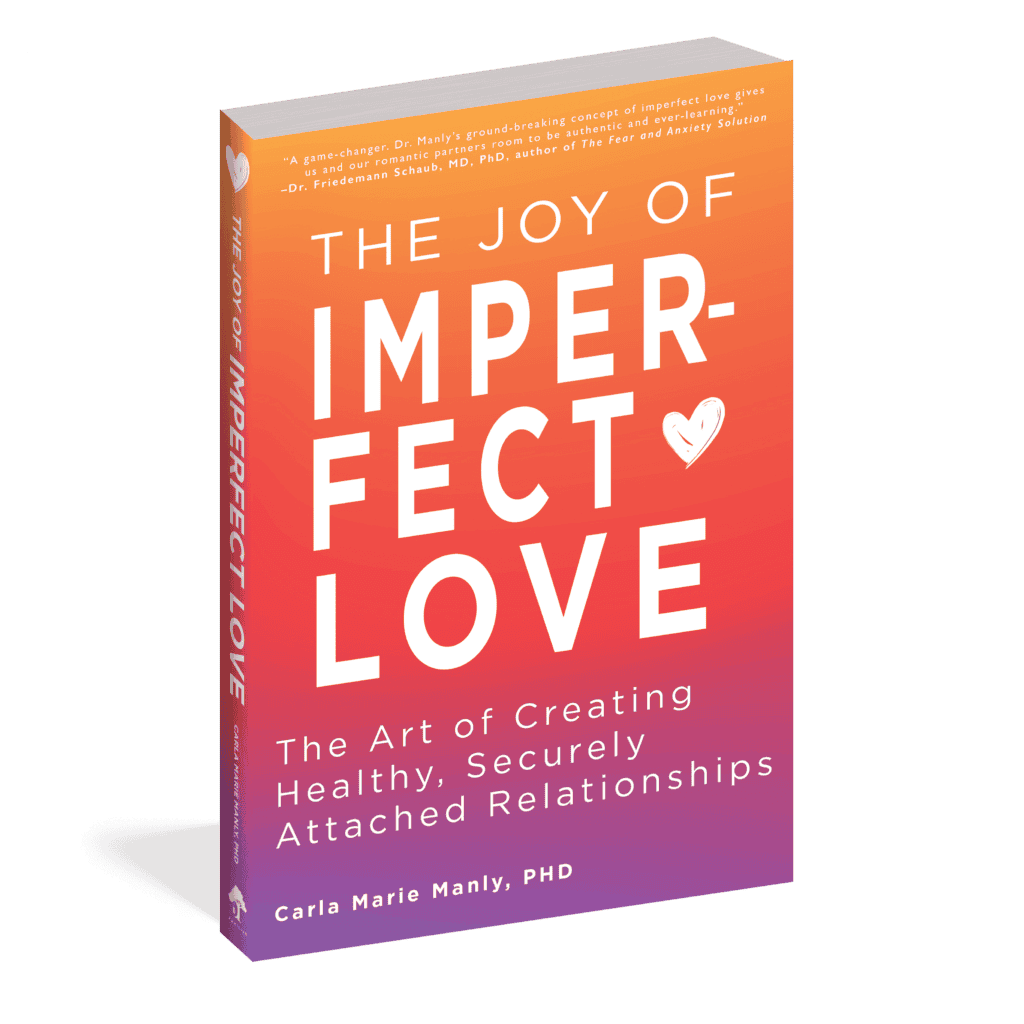
The Joy of Imperfect Love
Excerpt from The Joy of Imperfect Love by Dr. Carla Marie Manly.